Cultivating Mindfulness

Every so often a word grabs attention because it seems alien to everyday speech, yet begins to appear prolifically. It begs investigation. Yesterday “mindfulness” appeared frequently in a Virtues Project workshop hosted at our church. Later in the evening, I received an unrelated invitation to complete the final phase of a survey being conducted by a university study on “mindfulness.”

So what is it? The Virtues Project describes mindfulness as “living reflectively, with conscious awareness of our actions, words and thoughts. Awake to the world around us, we fully experience our senses. We are attentive to others’ needs. We refuse to rush. Living mindfully lightens our lives by helping us to detach from our emotions. We transform anger to justice. We seek joy instead of mere desire. We cultivate our inner vision, aware of life’s lessons as they unfold. Mindfulness brings us serenity.”

This description, of course, gels well with terms that emerge from the practice of Christian meditation, such as “wakefulness”, “awareness,” and “paying attention.’

In these terms, Jesus spoke of mindfulness often and carefully cultivated it within his own calling. I think this is why he was able to differentiate a different kind of touch in the midst of a clamouring crowd (Mark 5:21-34). Of course this is not the only instance where Jesus models mindfulness. There are many more where Jesus teaches it – just survey the Sermon on the Mount!

So, if you’re a New Years Resolution sort of person, “mindfulness” might not be a bad one to aim for.

‘No grey areas’ in stance on whaling, says minister | The Australian

Politics is always going to see the tension between environmental striving and so-called economic necessity. This is a given. But why try and  hide it? When all comes to light, as it inevitably will, our lead negotiators are revealed as disingenuous, saying one thing (a lie) for public consumption while sealing compromise behind closed doors.

‘No grey areas’ in stance on whaling, says minister | The Australian.

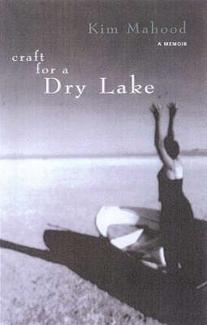
Craft for a Dry Lake by Kim Mahood

Part of my summer reading is an autobiography that weaves the theme of attachment to land by settler and Aborigine alike. The death of the author’s father prompts a personal pilgrimage to the remote station lands of her childhood. Her connection to the land is marked by ambiguity – it is a wrestling with identity that does not find satisfaction without including Aboriginal perspectives and connection. Through writing and painting, Kim Mahood shapes her journey.

This excites me for it gels with the continuing “listening journeys” some of my church are currently engaged in, particularly as we seek to discern how our own identity is affected by connection to the land we now share and the nuances of mapping and naming the land which now has the layer of European settlement imposed upon it.

An excellent review of Mahood’s work is here:

Eco-humanities Corner :Kim Mahood’s Evolving Geographies by Saskia Beudel.

The SIEV-221 drama: lessons from a disaster

It’s only a few weeks since a maritime refugee disaster occurred off our coast. While the aftermath has largely slipped off the radar of mainstream awareness – the question of developing humane asylum seeker policy remains untouched.

Jack Smit of SafeCom is one of the most relentless and compassionate commentator/lobbyists I have come across for monitoring and challenging the political discourse.

What’s been going on since SIEV-221 foundered on the rocks of Christmas Island? Check out The SIEV-221 drama: lessons from a disaster.

We Three Kings of Orient Are…

… but not the magi of Bethlehem in Matthew 2:1-20!

  • We don’t know how many there were – tradition varies from the popular three to the less known twelve.
  • The magi are not described as “kings” – there are two kings in Matthews’s account – Herod and Jesus – and the nature of their respective kingdoms were (are) in conflict.
  • Neither are the magi described as wise men – indeed this reference best fits the scribes and scholars urgently summoned by Herod to disclose what could be known about the Messiah sought by the magi. They represent the wisdom tradition of Israel.
  • While the word magi is often translated “magician” or “astrologer”, an 8th century Syriac text renders the word for magi as those called “to pray in silence.”
  • Matthew’s gospel goes on to describe the kingdom of heaven as “hidden from the wise and revealed to little children.” The kingdom of heaven invites its heirs to service of one another and thus of God (exemplified in Matthew 25). To the extent that the magi of Matthew 2 reveal these characteristics in the brief account of their visit, they are both wise and royal.
The point of all this Christmas card iconoclasm?
To let Matthew’s gospel say to us what it really intends to say.
God is universally revealed in the human presence of Jesus right from his infancy. Those who approach Jesus with the clarity of simple child-like attention and a servant heart that eschews displays of power are the truly wise and regal.
(From this morning’s harangue!)

A New Year’s Resolution awaiting fulfilment…

A bit of bush doggerel for a job I have to get done…

I sit by the fountain on New Year’s Day;
the bricks shimmer and shine in burning heat.
Through the parched bowls the leaves swirl and sway;
no streams of water – the pump is beat!

Beneath the cover the water is brackish;
the pump underneath needs tradesman’s skill.
Although the still depths are cold and blackish,
I plunge down my arm – and, Oh! What a thrill!

The church built the fount six years past –
a feature for the courtyard – so we were told.
With garden seat and plants that last,
‘twas a place for resting for young and old.

And so it happened – the fount became a feature,
the running waters a delight to behold.
Not only people, but every bird and creature
rested and played by the streams of gold.

Shoppers passing,  old folk sitting,
mums with toddlers seeking distraction,
school kids massing, matriarchs knitting –
the ecclesiastic fountain gave strong attraction!

Three bowls gushing, an old man musing:
“Surely the Trinity!” pondered he with alarm.
A lone one sitting at midnight perusing
the sights of bubbling, the heart’s good balm.

In times of trouble, the fount gave solace,
Remember the tribute to Van Tuong Nguyen?
The waters yearn to resume their promise.
Let’s replace the pump and begin again.

I sit by the fountain on New Year’s Day;
the bricks shimmer and shine in burning heat.
The dented bowls and debris clamour to say
“Live streams again will return a good treat. “

Gulp!! – every day??!!?

You’ve got to be kidding. WordPress has just issued a challenge to it’s blogging community to post something every day. This is meant to inspire confidence and competence in “fit-start” bloggers like myself.
Well, I’m up for it – even though I’m a sprinter rather than a marathon runner!
The trick will be to keep things moderately interesting to at least 10% of those who stumble on to this page (a self- defeating statement in itself – but I’m leaving it ‘ere to keep me ‘umble)
So, roll on 2011!

WA Council of Churches full of delightful surprises.

What a council we had today!

It was hosted by the Syrian Orthodox Church, a small community which is itself hosted by the Norbertine Priory in Queen’s Park – a unique partnership. The richness of the opening prayer service in Aramaic (also bilingual) heralded a morning of celebrating good news of inter-church sharing at the grassroots.

  • Perth Prayer began as a small group of praying businessmen in a tall office building. It expanded quickly to other offices in this boom town. Such was the variety of Christian traditions represented that a very simple common manner of praying and sharing over a Wednesday lunch hour has been adopted. The move to the central venue of the Wesley Uniting Church in the middle of Perth and the imprimatur of the council of churches has seen this initiative become a powerful witness to the unity to which Christ calls his churches.
  • Project54 is calling individual churches across all traditions to adopt a Commonwealth nation for prayer during the lead-up to CHOGM 2011 which is scheduled for Perth in October (12 months from now). To participate, all a church has to do is register through the website at www.commonwealthprayer.org
  • Anglican Archbishop Roger Herft shared his journey as a participant on the International Anglican-Orthodox Commission. In particular he noted the respectful candor of the talks as potentially divisive issues sought a basis for discovering unity in diversity of theological perspective (eg ordination of women). In particular he noted the challenge of the assertion that if we do not express that to which we are most passionately convicted, we are acting hypocritically, and the dialogue fails to accomplish its purpose. Fr Boutros Issa of the Syrian Orthodox Church responded, outlining the history of Anglican Orthodox relations.
  • We explored the challenge of ecumenical work across Australia as we pondered the slow takeup of the National Council of Churches of Australia  “Covenanting Together” initiative.   It was hoped that the process, commenced in 1996, would have greater traction now. It was discerned that different contexts gave different means of expression to some of the intent behind the document. Although it reveals an important historic marker in the national ecumenical journey, there are more fluid church relationships alongside the traditional institutional expressions which must be taken into account.
  • Changes in governance, staff job descriptions and a freshly articulated commitment to grassroots ecumenism are pointing to a currently energised and focused council.
It’s always good to go home from a Council meeting feeling inspired and excited!