An Evolutionary Theologian’s 10 pointers for progressive practice

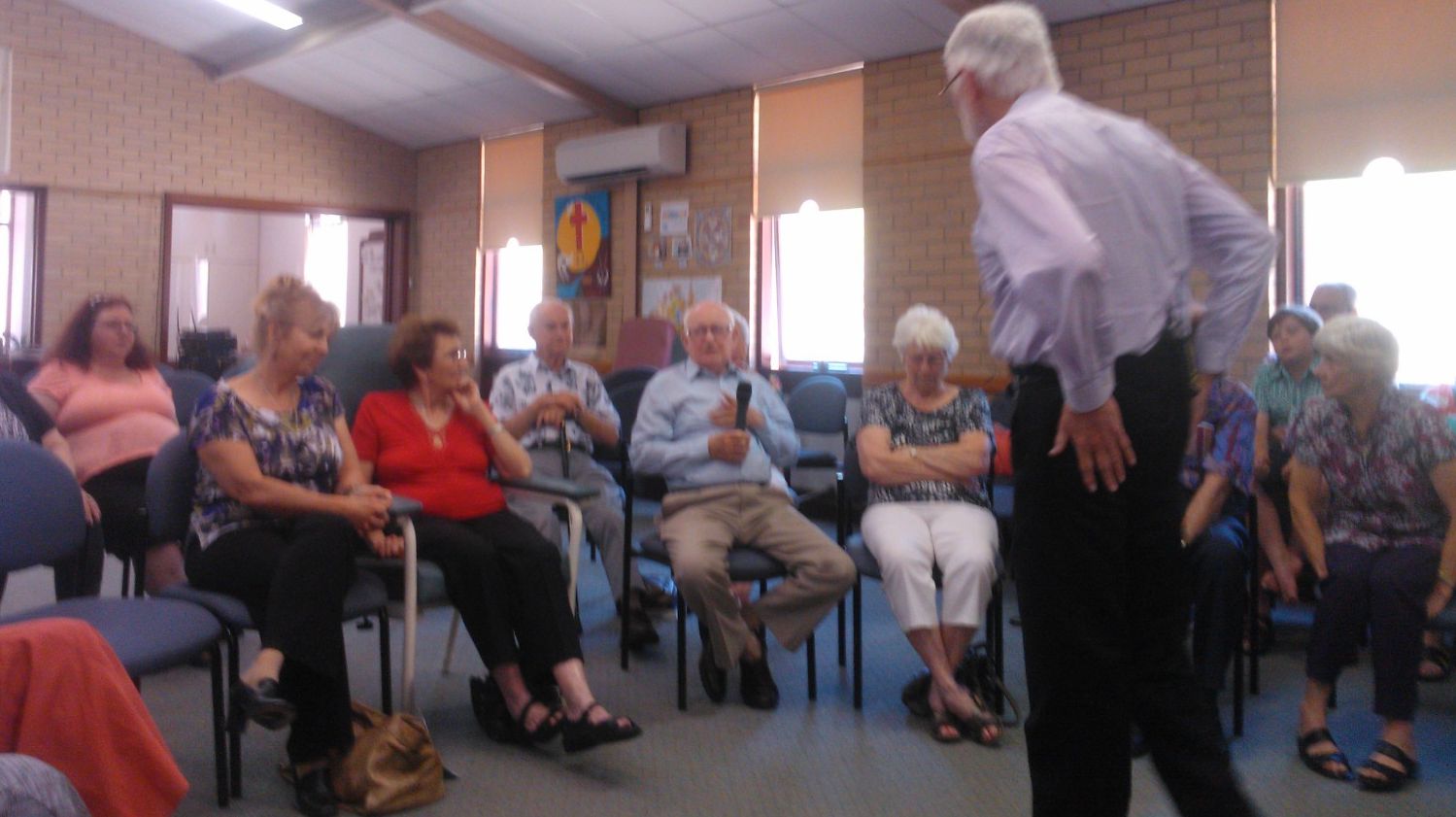
Bruce Sanguin shared 10 succinct pegs for evolving practitioners of the Jesus way to hang their hats on at the Common Dreams Conference in Canberra tonight.

  1. Kick the apocalyptic habit. Things ain’t all bad, indeed the world is ablaze with the glory of God if one cares to look.
  2. Be inclusive of the tradition that nurtured you and provided your confessional DNA.
  3. Affirm providence – the loving nurture that pervades the cosmos.
  4. Get out of your heads – drop into your yearning. In avoiding the fear of the irrational, do not neglect to embrace the trans-rational.
  5. Offer hope.
  6. Preach beauty
  7. Return to the wisdom of the body – personal and planet – remember the Christian faith is incarnational.
  8. Redeem legacy of indigenous wisdom through listening to first peoples elders.
  9. Complain less and build the Kingdom of God more.
  10. Love all creation.


Is “Progressive” progressive enough?


This is the gist of one of many conversations emerging from today’s conversations at Common Dreams.


For some, the term “Progressive Christianity/Religion” sits uncomfortably – it can sound and feel elitist, judgemental and lack distinctiveness in articulating the motives of the gathering momentum (which are diverse and multi-directional anyway).


The metaphor of midwifery, also introduced today, informs the dilemma. After all, it is not usual to name a child until after it is born!


For now, progressive in the sense, of “moving forward”, “non-static”, “evolving”, seems to be OK for a peg to hang discussions on.


The movement looks for expressions of faith that are practical, based on Jesus inspired action rather than defining and debating Christological abstracts, inclusive rather than exclusive in transforming community, and ready to be caught up in wonder and partnership across a multiplicity of scientific, artistic and social disciplines.


In some ways, it’s back to the beginning, the core business of those who called themselves followers of the Way.


If this is what is meant by progressive, we are in for an interesting ride.


Do you hear what I hear? A voice in the wilderness ….

As our new government continues to dismantle structures of humanitarian aid through a policy of “absorption” and further bastardise our collective responsibility to the world refugee crisis, it was good to hear today of another voice of constructive protest.

A Progressive Christian Voice (Australia) described its manifesto at the Common Dreams Conference currently under way in Canberra.

APCV describes itself as a group of Christians who wish to contribute to a public debate by promoting a generous and future-focused understanding of the Christian faith.

It’s manifesto includes:

  • understanding Christian opinion to be more diverse and broader than portrayed by the media
  • contributing insights from progressive streams of Christianity
  • minimising effect of powerful lobby groups on public discourse
  • promoting public awareness of diversity of Christian opinion
  • welcoming fresh insights into the interpretation of Christian scriptures and tradition
  • not speaking on behalf of any Christian denomination, congregation, community or organisation

Think I can add my voice here! Let the green shoots burst forth from the cold earth.

Paradox of Spring

Today sees the installment of arguably Australia’s most conservative government ministry. It is also the eve, in the same city, of the Progressive Christian Common Dreams Conference. The juxtaposition of these two events creates a tension reminiscent of the paradoxes described by Parker Palmer when he explores the tug of war of life bursting forth from resistance – green shoots struggling from the cold dark earth towards the light. Today we will hear government pronouncements that reflect the cold philosophies of economic rationalism. Common Dreams, I anticipate, will fuel fires that warm earth sufficiently to nurture and germinates seeds of renewal and promise, so that compassion and natural justice once again have a voice that is heard in the crafting of public policy.

The Wars Over Christian Beards | Christianity Today

I’ve not had negative feedback on any of my variations of facial hair over the decades – starting with my clean cut afro in the 60’s, through to full face Ned Kelly and my current Colonel Sanders. Who would have thought prickle faced preachers to be such an interesting ecclesiastical subject for scrutiny.

The Wars Over Christian Beards | Christianity Today.

Vocational Wisdom

Photo of Parker J. Palmer

My peers agreed it would be an excellent focus for our small discussion group – Living the Questions: Essays Inspired by the Work and Life of Parker J. PalmerSam M. Intrator (ed.), (Jossey-Bass, 2005).

I had not previously heard of Parker J Palmer, but was attracted to his deliciously alliterative name. Google led me to discover that he is a sociologist/educator of significant standing across a multi-discipline spectrum. Many human services workers – teachers, lecturers, sports coaches, community workers, religious leaders – have benefited from his service of leading them to nurture and trust their deeper wisdom in the unique expressions of their calling.

This collection of essays seeks not to fete the life work of Palmer, but to extend the conversation stimulated by his skilful prodding.

Reluctant in attempting to trap Parker Palmer’s thinking in a reductionist “dot point summary”, the editor Sam M. Intrator nevertheless grasps the nettle, which is helpful to new initiates such as myself.

He thus summarises the body of work that inspires this collection of essays:

  • All human activity emerges from our inwardness, for better or worse. As we work and live, we project the condition of our souls onto our relationships. Sustaining good relationships among those with whom we work and live requires self-knowledge of our inner terrain.
  • There are pedagogies and ways of knowing that can invite and welcome the soul and heal the person. For Parker, being a writer who honors the sacred and being a teacher whose practice invites the soul into circles of trust are important life callings.
  • The route to enduring social change runs through individuals who join together after making a decision to live with integrity and wholeness. Despite his affection for the monastic life, Parker is a man of action who calls on us to understand the dynamics of social movements and participate in “right action.” 

I find this very inviting. Vocation ceases to be moulded in terms of career path and becomes integrated withe expressions of the inner self, something that became increasingly important for me as self-awareness came more and more to the fore in my day to day dealings.

I look forward to reading and pondering the essays.

Behold, the six types of atheists – CNN Belief Blog – CNN.com Blogs

A fascinating, if brief taxonomy, that surely has counterparts amongst the vast spectrum of theists. Although running the usual risk of “boxing” people in rather than focusing on engagement in open conversations, such categorising can, ironically, help guard against simplistic assumptions.

Behold, the six types of atheists – CNN Belief Blog – CNN.com Blogs.

When churches confer nationally – NCCA 8th Forum

Theologies confessed conservative and progressive views.
Ancestries bore Asian, Anglo-Saxon, Indigenous and Middle Eastern perspectives.
Close to one hundred delegates gathered from city and country, together with observers and invited guests.
Daily worship drew on the full range of traditions present and held all together.

Conversations were honest, bold and respectful, enabling discernment between converging positions and a mutual holding of divergent viewpoints.

This eclectic gathering of leaders from Anglican, Churches of Christ, Lutheran, Orthodox, Roman Catholic, Uniting Church and other Christian bodies set the agenda for the next three years of the National Council of Churches in Australia.

Amongst some significant decisions were:

  • the addition of the priority of peacemaking as a core ecumenical activity
  • support for the recognition of indigenous peoples in the Australian Constitution
  • the launch of a combined churches Refugee Action task force
  • support and cooperation for the Royal Commission into institutional sexual abuse and support for continuing work in establishing accountability, safety, welcome and healing in general church life.
  • ongoing work in talking with stakeholders and government in working towards a peaceful solution re Palestine-Israel

These few details will be filled out as fuller reports appear on the NCCA site.

I attended this forum wearing four hats: a Churches of Christ delegate, state Council of Churches observer, minister of a local church that has been driven by a strong ecumenical vision and a wondering pilgrim. It was a delight to discover I could wear them all at the same time. It was with some parochial pride that I listened to the words of Dr Michael Kinnamon, keynote speaker and prominent ecumenical and Disciples leader, as he succinctly and eloquently summed up the opportunities and challenges  for churches working, speaking and being one today. Far too many thoughts to jot down here as I wait to fly out to Adelaide – but watch this space!