Australia’s new six classes

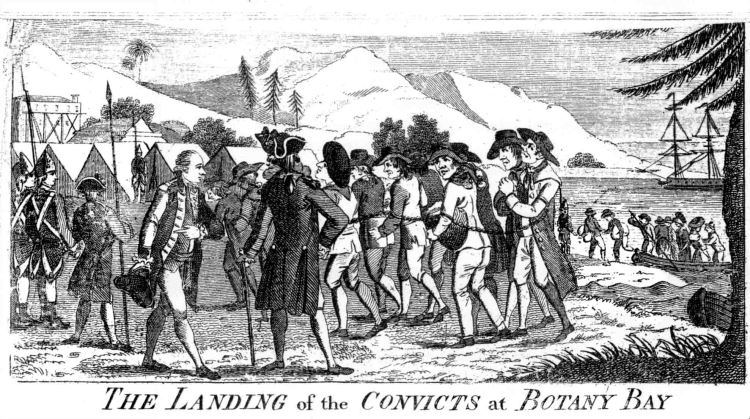
465px-Lambert_Farbenpyramide_1772Aussies have long said, “Jack is as good as his master” – we are the land where equal status is championed and where we eschew the class consciousness that separated the lower convict class and their gentrified overseers at the outset of European settlement.

Sociologist Jill Sheppard, in a recent report, suggests there are six identifiable classes in Australian society.  Jettisoning the usual single streamed occupation marker exploring working, management and executive roles and, nodding to generational changes that have taken place, Sheppard adds social, recreational and aspirational factors that separate distinct groupings and their perceived standing in the community.

There are probably no surprises here. It has long been established that Western society fueled by a Christian Reformation work ethic has been inherently upwardly mobile and that the goal in life has been perceived as reaching the next rung on the ladder.  The transported convict aspired to become the freeman who aspired to lease an allotment who then aspired to outright ownership and some measure of control over those following behind.

It is an ancient phenomenon. In a kind of a coach’s pep talk, G-d tells the Israelites who have benefited from resettlement in their promised land not to forget the core values upon which their nation is being built. Deuteronomy 6:10-18. Their forebears were freed from tyranny to forge a new society that would be an attractive model for all nations. How easy it is to forget!

Presenting one’s credentials …

Healing_of_the_demon-possessedFirst impressions are paramount, our life coaches tell us. Suit up, look confident and practice that opening line if you want to succeed in love, finance and influence.

What if your goal is to begin a process that transforms the world from one beholden to despotic violence to one that exhibits the wholesome fullness of a paradise based on selfless care for the environment, one another and relationship with the Ground of all Being? How does one present one’s credentials?

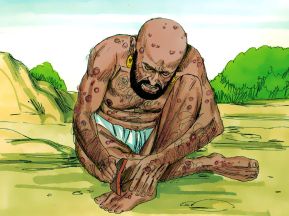
Jesus went to his community’s regular gathering place to teach and expand a collective vision of shalom – a marination in the peace of the reign of G-d. (Mark 1:21-28) On cue, the darkest manifestation of the tyranny that opposes this vision arises in a troubled villager and challenges him. Jesus summarily dismisses the demon and the man is healed. The crowd is amazed and Jesus has established his bona fide before the end of the first chapter in Mark’s story.

Contemporary commentary on this story tends to focus on the phenomenon of “demon possession” and “mental illness.” This misses the point. Mark’s gospel sets the stage for understanding the nature of our engagement in a conflict of cosmic proportions. Jesus is presented as the one anointed with the influence and authority to overcome all that threatens to overwhelm and destroy.

In things non-essential, liberty… a caveat!

chain

“In things essential, unity; in things non-essential, liberty; in all things, charity.”

This eirenic phrase is attributed to St Augustine and has been taken up by various reformers, including the Moravians and the space within the spectrum of the Christian family to which I belong.

There’s a rub, however, when it comes down to deciding what things are essential. Any community that gathers for a common cause is on shaky ground here. We claim unity in Christ as our polar star, but it’s the navigation equipment that we debate. What is essential and what is not essential?

The Apostle Paul pleads a solution in 1 Corinthians 8:7-13. In summary, he says those who are on the stronger ground must accommodate the more fragile and vulnerable members of the community, even if it means laying personal freedom to the side.  Sacrifice a little bit of liberty for the sake of unity under the umbrella of charity (which for Paul and all who follow the way of Christ is supreme.) In a society where each is out for one’s own, this is countercultural. Communities like mine must model it if its wisdom and life-giving energy are to be visible.

As my church secretary says with just a hint of irony, “Just as well we aren’t doing something hard!”

One man’s meat …

800px-Porterhouse_steaks_grilling_barbecue_grills_meatThere’s an app I’ve discovered on my phone that can break down the nutritional value of my daily meals. It seems like I have a healthy balance in the meat department. My vegetarian and vegan friends might be appalled at such a notion, however, and point to many other sources of protein. We remain friends.

I have observed, however, that the kind of debate that erupts around diet can divide families and sever friendships. The Apostle Paul seems to mediate a similar dietary issue in the new and troubled Corinthian church. (See 1Corintians 8:1-6) 

It seems those who could afford to eat meat were scandalising their siblings in Christ by consuming temple burgers that had been dedicated to the Roman gods. “We all know these idols are false – that there’s only one G-d. It’s good meat – why waste it?”

Paul diplomatically agrees but says there is a more important question at steak (sorry – stake!)  – that is “What drives how I decide an action in a community where we strive to be one by looking out for each other in such a way that the world is transformed?”

Now that’s a meaty question!

To what extent do the sensitivities of a wider community impinge on something as personal as what I eat? Tho what extent do my personal decisions affect the overall harmony of a close community? Perhaps the answer is somewhere in the point that Paul concedes: “yet for us there is one God, the Father, from whom are all things and for whom we exist, and one Lord, Jesus Christ, through whom are all things and through whom we exist.”

When we focus on what unites rather than what divides (without ignoring or discounting such), there is progress.

Chilling out as agents of change…

PeasHow does one address ill-fitting and unjust systems in family, church and community while maintaining a calm disposition? Isn’t there a necessity for the passion of a prophet, the zest of a zealot, the tenacity of a teacher, the resilience of a reformer to effect change?

When the Apostle Paul counsels the household slaves in the troubled church of Corinth to “remain in the condition you were called?” is he suggesting that they should not rock the boat? (See 1 Corinthians 7:17-24) 

Change is constantly necessary if human society is to function as it ought. Paul seems to be addressing where it begins – deep in each human soul. Unless we are free within ourselves, even under the direst circumstances, we are unable to connect sufficiently with others in order to bring about external change.

Immediately – right now, if not sooner!

alarm-clock-3872x2592_74121I’m a born procrastinator. I need time to think things through. “Immediately” is not a word that appears often in my working vocabulary.

It occurs twice and insistently in the text from today’s reading in Mark’s gospel. 

Four men instantly drop their work to go around with one who has just taken up the baton of his politically assassinated cousin. Critical moments call for instant decisions, I suppose. And let’s not de-politicise what was at stake here – it was the proclamation of an alternative empire to that of Rome.  ἡ βασιλεία τοῦ Θεοῦ· is more correctly translated as “empire of God” than “kingdom of God.”

I would like to think that as one who is absolutely sold on the “empire of God” as proclaimed by Jesus that I would be as immediate in my response to claims by alternative empires, especially the dominant western one that claims my allegiance now and whose political masters brand many like me unloyal and unpatriotic when we measure their claims against his.

There was nothing rash or immediate about Jesus’ proclamation, however. It was 40 days in the making and rejected easy fixes to get to the nub of what mattered. Perhaps that’s why it evoked such an immediate response.

Jonah – the reluctant persuader

138.Jonah_Preaches_to_the_Ninevites
Gustave Doré [Public domain], via Wikimedia Commons
Is it possible to sell a product you don’t believe in? How motivated does one have to be to persuade a client, be it one individual or indeed a whole nation with a message in which you have zero confidence?

Well, apparently Jonah pulled it off! (See Jonah 3:1-10) 

Admittedly, Jonah’s message is full of the fire and brimstone vitriol that matches his disposition but, apparently, the Ninevites believed they deserved it and responded fully to the action point that Jonah put to them!

Which just goes to show you can catch some flies with vinegar if you don’t want to give away your honey!

The Nourishing Tomb of the Fish

jonah-whaleImagine surviving the innards of a fish. The gastric juices alone would do wonders for the skin!

The tale of Jonah is not interested in this detail (see Jonah 2:1-10). Ancient and forever symbolism holds before us the mystery of dark entombment as a liminal place between life and death, crucifixion and resurrection.

With Love To The World quotes Joan Chittister who says:

Darkness deserves gratitude. It is the alleluia point at which we learn to understand that all growth does not take place in the sunlight.

and Barbara Brown Taylor who reflects, “I have learned things in the dark that I could never have learned in the light. I need darkness as much as I need light.”

In dire circumstances, the recalcitrant Jonah draws on his reserve of spiritual resources and comes to a place of self-abandonment to God’s path of wholeness.

The fish-tomb is temporary. It spews Jonah onto the beach ( and no doubt swam off to tell it’s fish-friends about the “one that got away!”

Jonah – more than a Whale of a Tale!

Jonah_and_the_Whale,_Folio_from_a_Jami_al-Tavarikh_(Compendium_of_Chronicles)
Folio from a Jami al-Tavarikh (Compendium of Chronicles) circa 1400

… and there is no whale – the text refers to a “large fish” which is only incidental to the hermeneutical thrust of the story!

It is considered that the story of Jonah is a corrective cautionary tale to the purists of the era of Ezra and Nehemiah and the reestablishment of the Hebrew nation following return from exile (from 538 BCE), where it was required that all foreigners be removed from the reclaimed territory, even wives and children of non-Jewish stock.

Jonah was called to proclaim God’s message to Nineveh (a symbol of the evil empire that had held theJews in captivity). Jonah the purist baulks and flees by boat in the opposite direction.  Today’s text finds Jonah being quizzed by fellow passengers and crew in the midst of a raging storm. It seems important to know who is who and, ironically, Jonah finds himself submitting to multicultural reality and placing himself at their compassionate disposal, even to the possible cost of his life. In short, with reluctance on the part of his travelling companions, he is chucked overboard!

Maybe in our fear-driven political climate, we can work out where we are in the boat that is fleeing Tarsus.

And maybe there’s a large fish somewhere waiting to rescue us!

My current running commentary on biblical texts is based on the Australian published With Love To the World: a daily Bible reading guide based on the Revised Common Lectionary. Many in my congregation are using it regularly. 

“I see you”

Avatar
“I see you.” This meme from the movie Avatar did the rounds for a few months. It seemed to be nourishment for a collective hunger in a world which had descended into anonymity and a penchant for the kind of efficiency that codes citizens by number rather than name.

It was a kind of epiphany – an understanding of something deeply significant in order to be fully human.

The Gospel passage by the Revised Common Lectionary for Sunday (John 1:43-51) has two key “I see you” moments.

Philip is first “seen” by Jesus as he begins to gather his close disciples. Philip knows he is “seen” as he immediately goes with Jesus and soon after recruits Nathanael, who is apparently reluctant to acknowledge that “anything good can come out of Nazareth.” Jesus acknowledges and praises his scepticism and “sees” his potential.

Nathanael typifies our natural human response. We fear gullibility within ourselves and develop a protective mask that is only removed when trust is established. The mutual  “I see you” epiphany that then takes place between Nathanael and Jesus reveals a trust for which the world starves.