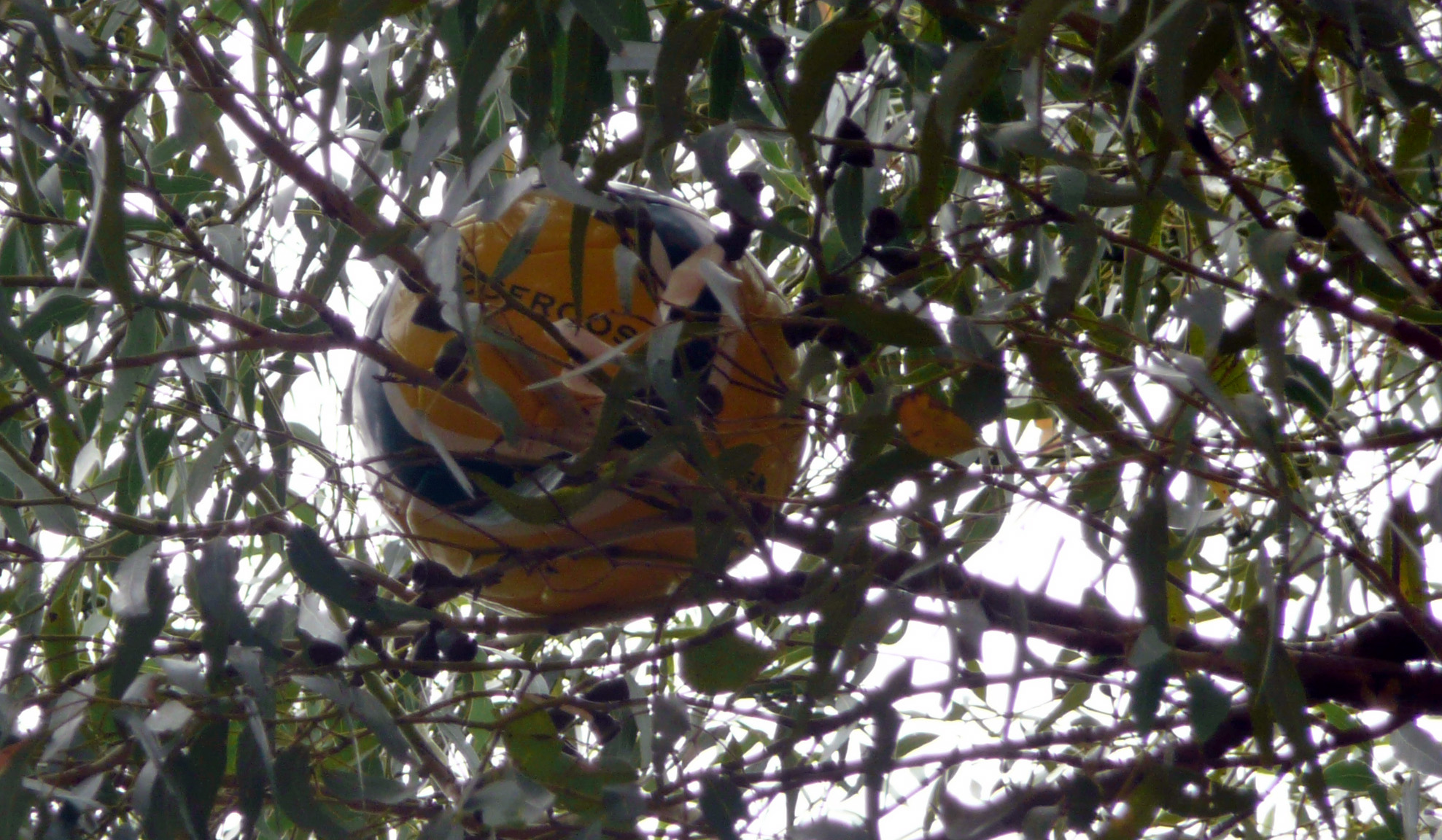
 My employment has always dictated where we live. We’ve always been very fortunate in our locations – thriving port city to bushland capital to genteel hills settings – and the last 15 years, a five minute journey from scenes like this. I probably have more sunset photos in my collection than anything else.
The real deal
Here’s a prayer book with a difference – it certainly arrested my attention. It’s called “Common Prayer: a liturgy for ordinary radicals” and you can see a daily on line version at http://commonprayer.net/
An excerpt from today’s offering demonstrates the true meaning of radical (“from the root”)
Frederick Douglass [1818-1895] wrote in his autobiography, “Between the Christianity of this land, and the Christianity of Christ, I recognize the widest possible difference — so wide, that to receive the one as good, pure, and holy is of necessity to reject the other as bad, corrupt, and wicked. I love the pure, peaceable, and impartial Christianity of Christ; I therefore hate the corrupt, slaveholding, women-whipping, cradle-plundering, partial and hypocritical Christianity of this land. Indeed, I can see no reason, but the most deceitful one, for calling the religion of this land Christianity.”
Ball-eating tree
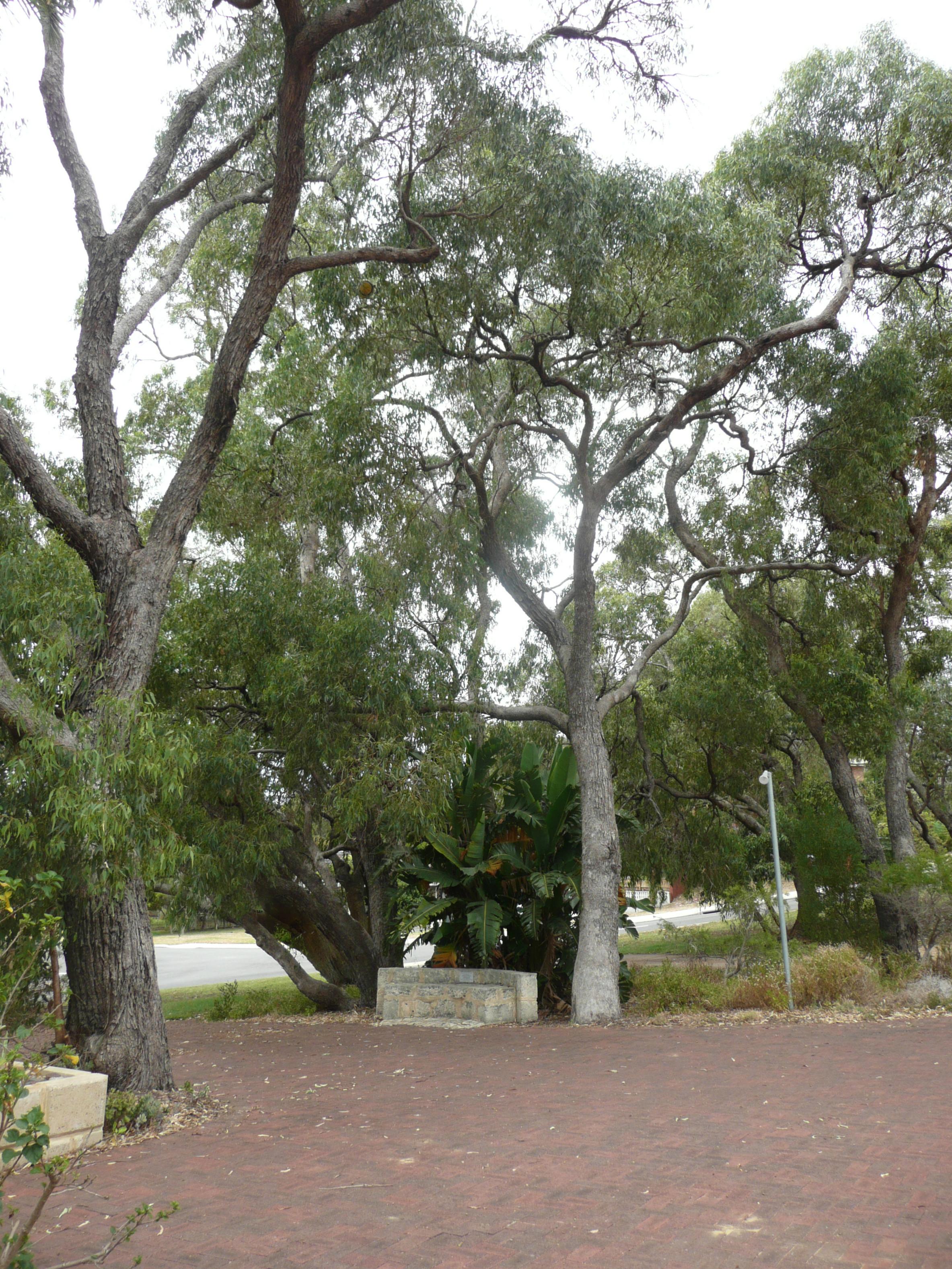
 Move over Charlie Brown.
Hereafter – Film Review
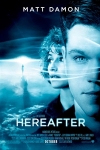 The unknown matter of death continues to fascinate us, whether or not we form our view from a religious, spiritual or nihilist perspective. This film, directed by Clint Eastwood, weaves together the disparate stories of three characters, all intimately touched by death in different ways. Rising French career journalist, Marie Le Lay, survives the 2004 South East Asia tsunami, having drowned and been revived. George Lonegan, in San Francisco, flees a life long psychic “curse” of being able to contact the dead, an ability his older brother is always pressing him to exploit. A few cameos illustrate how destructive to living a normal life this is for George. Meanwhile, in London, 12 year old twins Marcus and Jason ward of Social Services to keep their small family together under the care of a loving but drug-addicted mother. Marcus’ world falls apart when Jason is hit by a truck and killed while running an errand. Slowly these stories come together, each seeking answers to their respective dilemmas. Marie Le Lay finds her career trajectory changed as she investigates the meaning of her and others near death experiences. George Lonegan flees across the Atlantic to escape his bane, but, ironically, finds himself in a place where he must confront it. Marcus must find resolution to his experience of abandonment and incompleteness as a surviving twin. These are each compelling human questions in their own right. Easy and contrived answers are demonstrated to be unsatisfactory, both in the story line, and unfortunately for the film, in the conclusion of its own narrative.
Of course, as a Christian pastor who has sat many times with those passing over the “great divide”, I acknowledge the particular bias to which my critique leans. Life and death alike are both mysteries to be fully engaged. Eastwood’s film almost makes it in places, recognising our strange simultaneous curiosity and aversion to matters of what happens after death, but doesn’t quite know how to bring a conclusion that has integrity. I came away feeling a bit like the boy Marcus when the plethora of mediums he consults leaves him speechless at their foolishness and ineffectiveness.
Compassion – a “spiritual technology”…
Krista Tippett: Reconnecting with compassion | Video on TED.com.
Compassion has become a cliché through overuse and overexposure, contends journalist Krista Tippett. With story and lateral thinking, she explores new ways to reclaim and implement a sorely needed collective value. By linking it with everyday expressions such as “kindness,” “curiosity without assumption” and “beauty”, she invites us to reinvest in and reinvigourate a core component of being human. She wants to marry creativity with compassion in a “spiritual technology.”
Worth a listen if you are contemplating the climax of this week’s lection in Matthew 5:28-38 “Be perfect, therefore, even as your heavenly Father is perfect.” (rendered by Luke 6:36 as “Be merciful (compassionate) even as your Father is merciful (compassionate.”)).
[Memo to the pedantic: the contextual and theological relationship between the words “perfect” (teleos), and mercy/compassion (to yield, give way, commiserate, put yourself in place of the other) is defendable]
Turning the other cheek is not for sissies
Yep – it’s up for preachin’ this Sunday (Matthew 5:28-38)
Turn the the other cheek to the one who strikes you, give your cloak also to the one who sues you for your coat, go the extra mile. What’s the rationale?
According to Walter Wink:
Turn your cheek, thus indicating to the one who backhands you that his attempts to shame you into servility have failed. Strip naked and parade out of court, thus taking the momentum of the law and the whole debt economy and flipping them, jiu-jitsu like, in a burlesque of legality. Walk a second mile, surprising the occupation troops with a sudden challenge to their control. (Walter Wink, “Engaging the Powers: Discernment and Resistance in a World of Domination [Menneapolis, Fortress Press, 1992])
Sounds like roses on tanks in Manila, grandmas kissing soldiers in Tahrir square and asylum seeking detainees in Darwin passing the hat around for Queensland’s flood victims.
Sounds like creative and compassionate responses by the powerless to those who would wield power.
Is this what the Kingdom of Heaven looks like?
It’s now three years since saying sorry…
What has it meant?
If it has been a grudging acknowledgement in order to relieve the pressure of a collective nagging and vague sense of guilt, not much at all.
If it has been an empty vocalisation in order to finally silence, irritating and scolding voices we’d rather not hear – then zilch.
If it has been a genuine and mutual reaching out to one another in order to reconcile and entertain the possibility of real partnership, then something!
Reconciliation Australia’s “barometer” released early this week reveals that mutual trust is the big challenge, with low percentages on both sides of the divide. Yet there is optimism about progress. See CASE STUDY 3: TRUST BETWEEN THE TWO GROUPS IS LOW
Kevin Rudd, the author and deliverer of the prime minister’s apology in February, 2008, reflects on what was involved in coming to the occasion. See Apology To The Aboriginal Stolen Generations. His reflection reveals what is needed on a large scale if meaningful progress is to occur – and the foundation is relational before it can be political. This is what Aboriginal and Torres Strait Islander people have been telling us for decades. Let’s hope more of us are starting to listen.
When the circus accentuates tragedy…
I’ve just been listening to politicians conscientiously “questioning” the rationale for flying bereaved asylum seeker detainees the long distance from Christmas Island to relatives’ funerals in Sydney. These are the victims of the shipwreck off Christmas Island late last year. “Why not lay them to rest on Christmas Island?” they opine. Forget the fact that there is already extended family in Sydney where the traumatised refugees hope to relocate and would surmisably gain some degree of comfort that their loved ones were laid to rest nearby. What’s the cost of a plane fare compared to the extraordinarily extravagant cost of off-shore detention?
I want to know why both Government and Opposition persist in singing the praises of off-shore detention when mainland community based assessment and resettlement was healthier, more integrative and humane for so many years.
Celebrating the Unthanks
Festivals of arts always give us the opportunity to dip into a smorgasbord of genres we may not otherwise take the trouble to encounter. Jenny and I celebrated belatedly her birthday by having a night out with the Unthanks, a unique folk group blending traditional and contemporary music from the north east of England – (Unthanks is the surname of the two lead vocals – not a disposition!). The setting was great – a warm balmy night on Perth’s esplanade, a mob of happy Egyptian born Aussies celebrating at one end and us gathering at Beck’s Music Box at the other. The Unthanks connected quickly with the audience with their wry, self-deprecating humour and their repertoire of lullabies, clog dancing, sea shanties and ballads depicting historical and contemporary social commentary. It is true what the reviews said – they “inhabit” their music. It was a marvelous and winsome 90 minute immersion in Geordie song and dance. Here’s a taste (from a file clip):
Singing for flood relief
I often grab a snack in this food court and have thought how well it might lend itself to a “flash mob” performance.
Well, now it has! And it’s for flood disaster relief.
http://www.youtube.com/user/StorytellerMedia
(For some reason I’m unable to directly embed the video here.)
Edit: Ahh – good reason – it’s on a page where each click generates a donation to the flood appeal from Google ads! So go there and click!