What has been is what will be,
and what has been done is what will be done;
there is nothing new under the sun.Ecclesiastes 1:9 New Revised Standard Version (NRSV)
This is the most all-embracing commentary I can find on the very public exposure of the malaise which passes for parliamentary democracy in our Capital these last few days. what usually happens behind closed doors has been out in the open for all to see.
We have a new Prime Minister but the usual optimistic elation is tempered by expressions of public disgust and outrage that emerge from the exhaustion of dealing with an inept process that has, for some time, put party interests above the aspirations of the people.
That the new Prime Minister is a professing and active evangelical Christian is evoking many calls from the Christian community to “get behind this man” with constant prayer and (dare I say) uncritical support. Others from the Christian community will want to continue to call him to account, pressuring him to abandon policies that dehumanise and punish legitimate asylum seekers, debunk the need to address climate change, and diminish welfare support. This is fine – it is democracy at work.
The true call to the Christian community is to ensure that we find our rightful place in the toxic mix that passes for western democracies today. The two activities outlined above do provide the correct role for the church in a difficult political environment.
Prayer – directed with integrity for discernment not only on how to intercede for our public officers but how we ourselves will engage in the democratic processes available to us. We are representatives of a third way. Our agenda is well-expressed in the great texts of Micah and Amos and Mary’s Magnificat. The Beatitudes and the Sermon on the Mount spell out a Christian manifesto. Informed prayer – public and private – will surround our political leaders and our church communities. Such prayer will enable Christian communities to demonstrate and model the changes they wish to see.
Prophecy – closely linked to prayer and seeking creative ways of being a Nathan to our political leaders. Picking up Eugene Peterson’s ministry of “nay-saying”, prophecy involves a forth-telling that cuts away the dead branches that serve neither “love of neighbour” nor “love of God.” This is a challenge in a neo-liberal climate that elevates the interests of the individual above all else, sometimes cleverly disguising itself as being “good for the other” in the long run.
If Christian communities across the land approach a humble strategy that effectively combines these two activities, there will indeed be “something new under the sun.”
We may even see some change in a parliamentary system that has not seen a Prime Minister complete a term over the last ten years!
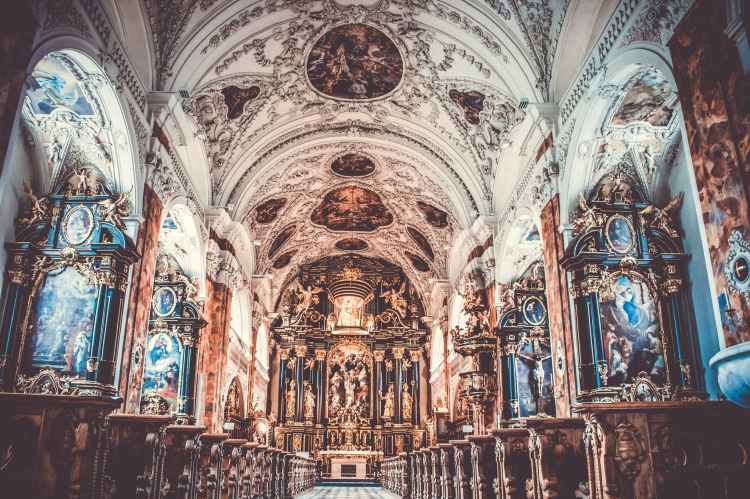
 Yesterday I listened to a Roman Catholic priest address an ecumenical but predominantly Roman Catholic gathering on Baptism and Meditation. In illustrating the practice of meditation (properly “contemplation”) as an act of creating hospitable space for us to become aware of God’s constant hospitality towards us, he described how, following his full observance of the exhausting yet rich rites of Holy Week, including Passion Friday and the Easter Vigil, he sought refuge from liturgy and theology by attending his local Church of Christ, where he could simply “be.” He knew the minister, yet the church was large enough for him to be lost anonymously in the Easter Sunday crowd (or so he believed). Nevertheless, he was overwhelmed by the hospitality offered him as an anonymous visitor. He said this is what it is like to live out of our baptism which has more to do with relationship than correct liturgy and theology!
 Yesterday was my 43rd Thomas Sunday since ordination, meaning that I have possibly preached this many times on
 Atonement Day on the ancient Hebrew calendar marked the day that two goats were brought before the community. One goat was ritually slain, the other, the scapegoat, having had the sins of the community laid on it, was set loose into the wilderness, not to knowingly be seen again.
 Today begins the three days of Easter.
