Here is a micro-story that becomes a lynch-pin in a wide sweeping arc that embraces Jewish and Christian salvation history. Sharing the fate of many who battle for survival in a world that still experience famine, cross-border xenophobia and the tension between security and personal loyalty, Ruth steps out and takes a risk that we see replicated over and over in today’s refugee movements. Sacrificial allegiance to one another shared in extreme duress has been the mark of many coming through resettlement.
Ruth, a widowed Moabite, pledges allegiance to Naomi’s Israelite deity in her determination to remain with her also widowed mother-in-law. Her demeanour through the remainder of her story carries something of the expression of trust celebrated in this psalm.
Sometimes the boon is to be found in something old and familiar (like a pair of old slippers). The questing scribe who discovers from Jesus that the most precise interpretation of the Law (in which he is an expert) is “Love God. Love your neighbour as yourself” possibly exhibits an “Aha!” moment of fresh insight. Jesus declares he is not far from the kingdom of God.
Again, a common theme runs through the selected texts for next Sunday, October 28th.
Job 42:1-6, 10-17
Sad and sorry Job, accommodating God’s ineffability, reorients his trust in God.
God rebukes Job’s “oh so right” would-be comforters and feeds them humble pie.
The closing elysian scene sees Job’s good fortunes and family richly restored.
So what’s the point of the Job saga? What role did it play in the faith community from which it arose? How does it play out today?
Now as then, with prosperity doctrine married to the politics of economic rationalism, we are offered a counterpoint that upholds the dignity of the individual and a warning against confusing God with mammon.
Psalm 34
This prayer of praise echoes the stance of one who, like Job, is reoriented to trust in God in spite of a rough time. Against the zeitgeist of a retributive religious system, the psalmist concludes: “The Lord redeems the life of his servants; none of those who take refuge in him will be condemned.”
Hebrews 7:23-28
Contrasting the work of Jesus as eternal High Priest against the appointed high priests of the old sacrificial system, we come to the crux of the Letter to the Hebrews. Christ has ushered in a new age, a new way of being before God. The old system repetitively cycled God’s people through the need to have their short-fallings made good through the ministrations of equally fallible high priests. The non-fallible Christ, taking on the role of High Priest, breaks the cycle, presenting God’s people as perpetually right with God. Does this mean we no longer sin? No, discerning, confessing and repenting is still part of our inner spiritual cycle, but with an infinitely more confident trust in our calling to Christ-likeness and the fulfillment of Christ-like vocation.
Mark 10:46-52
The healing of blind Bartimaeus is pregnant with meaning in Mark’s telling. An intriguing place to begin is by noting that from all gospel incidents of Jesus healing the blind, it is only here that one is named. Our attention is drawn immediately to the interplay between the identity of the blind man (“Son of Timaeus”) and his raspy calling out to Jesus as “Son of David.” One commentator delves into the Aramaic roots of the name Timaeus postulating its ambiguity of meaning. Does Bartimeaus present as the “son of fame” or the “son of shame?” Either needs rescue from metaphorical blindness if they are to see with the vision of the way of Christ! Bartimaeus trust is uninhibited as he abandons his cloak and, seeing, falls in behind Jesus as he enters his final days.
Next Sunday’s texts seem to focus on answering this question that often arises when we are frustrated. Things are out of control – who’s running this show? I’m in charge here and am being ignored and need to assert my authority – who’s running this show? We are confused, depleted, burned out, and have nowhere to go – so who’s running this show. We turn to the texts.
Job the good has relentlessly clung to a trust in God who has seemingly allowed Job’s terrible suffering without any hint of intervention. Even so, Job has deigned to question God’s wisdom in a form of the “Who’s running this show?” accusation. The response comes from the midst of a whirlwind – an appropriate metaphor for the ambiguity of the Divine under such circumstances. Martin Buber writes,
“But how about Job himself? He not only laments, but he charges that the ‘cruel’ God had ‘removed his right’ from him and thus that the judge of all the earth acts against justice. And he receives an answer from God. But what God says to him does not answer the charge; it does not even touch upon it. The true answer that Job receives is God’s appearance only, only this, that distance turns into nearness, that ‘his eye sees him,’ that he knows Him again. Nothing is explained, nothing adjusted; wrong has not become right, nor cruelty kindness. Nothing has happened but that man again hears God’s address.”
This Psalm is the natural response of the person who has arrived at Job’s experience of reconciliation with the notion that God’s sovereignty is not dependent upon or even related to our goodness or otherwise. The Holy has its own agency and acts accordingly. We are to attend to our own responsibilities without thought of divine reward or retribution and adopt an orientation to simple trust in what God has deigned to reveal of God’s creative purpose. After all, it is God who is running the show!
The unfamiliar terminology of this text further explains the link between human suffering and ultimate order. The “order of Melchizedek” under which Christ endured a high priestly suffering delves into an ancient pre-Israel notion of the link between striving and destiny. Human striving and divine grace are linked. To ask the question “Who is running the show?” is to place oneself in a place of the possibility of transition to an even deeper query: “How does human suffering find meaning in the light of Christ’s redemptive action?”
James and John want to run the show but they are not yet wedded to the way of Christ. Perhaps they need to enter more deeply into the experience of Job’s awareness and realise that they are walking with a whirlwind. Jesus puts it to them in the form of his own question – can they drink from his cup and enter the same experience of redemptive suffering that he must enter? He ultimately simplifies things for them. If they want to be in charge they must paradoxically adopt a servant’s heart.
I well remember a man, somewhat advanced in years, telling me that “growing old is not for sissies!”
Next Sunday’s texts remind us that living the life of faith can be much the same.
Is there room in contemporary experience for the twin terror of God’s absence and God’s presence? Can we know both at the same time? Job maintains a God-focus even from the bottom of the pit of his despair – he would contend with God if at all possible but at the same time shrinks from God’s total “otherness.” Both absence and the presence are impossibly felt at the same time. No easy answer – simply a call to attend to the paradox of God in the midst of life’s toughest struggles.
Jesus poignantly recited the opening phrase of this psalm while hanging on the cross. “My God, my God, why have you forsaken me?” For the devout Jew, to recite the first line of a psalm is to hold the hymn in its fullness. It is evident that the lived experience of God in simultaneous presence and absence is strongly expressed through the faith of Israel and there are no qualms or reticence in giving this feeling strong expression.
The burden of the writer of this work is to lead Jewish Christians to a sound understanding of the work of Jesus as Messiah in reconciling humanity to the Creator. He does not mince words in relaying how God’s word is like a two-edged sword, inflicting painful cuts that divide “soul from spirit, joints from marrow.” Jesus’ work as “High Priest” however, introduces a fresh element to the equation, enabling confidence and trust in knowledge of God’s favourable stance towards humanity.
A would be follower of Jesus retreats when he learns what would be required of him. Peter voices the protests of his peers about all they have given up to follow Jesus’ way. It is apparent that following Jesus is not for sissies! All over the world are multitudes who pay the cost to follow this way – in recent days I have heard of persecution in India, suppression in China and, last night, a young Palestinian speak of living the non-violent life of Christ’s way under the severe duress of occupation. Mark’s Gospel was penned by a community experiencing extreme duress as the result of becoming Christian. It is an expected part of the Way.
Here is the counterpoint to any popular “prosperity” gospel. Bad things do happen to good people. Here we see the beginning of a morality tale. Let’s not get side-tracked in the detail of ancient storytelling devices (did God really allow himself to be manipulated by Satan into using Job in some sort of cosmic gladiatorial contest?) Here the stage is set for the real contests that life sends our way. There are no slick answers but something precious emerges from the struggle. That’s the message these opening scenes are meant to convey.
Indeed, this might well be Job’s psalm. The poet holds fast to belief in the hold of his integrity against adversity and trusts the Holy One to be faithful even when all evidence of such faithfulness is hidden.
The anonymous letter to the Hebrews begins with a majestic announcement of the fulfilling role of Christ as the climax of the series of seers and prophets anointed to speak God’s Word to Creation. The later Hebrew cosmology of angels is used as a comparison to the glory to which humanity is called through the sacrifice of the Christ. Voices from early times onwards have called for the separation of Old and New Testaments and Hebrew imagery from Christian teaching, but this would amount to historical revisionism. We need to know and embrace our full story, especially those episodes that are beyond our cultural understanding. The New Testament is replete with imagery from the crucible of Judaism and is instructive in how its expression reached beyond the faith of Israel to embrace the whole cosmos.
This passage has recently been used as a bludgeon in the same-sex marriage debates. The context reveals that Jesus was opposing the patriarchal concept of women and children as chattels, easily disposed of with a ticket of divorce. Marriage bonds are sacred in their mutual accountability. In the same breath, you must become like a child to enter the Kingdom of God. With these utterances, Jesus crossed significant cultural boundaries and exposed himself and his followers to increasing risk and danger.
Next Sunday, many churches will reflect on some or all of these passages. Is there a common theme? I think there is. I’ll not reveal what I think it is, I usually do that annoying teacher thing and ask, “What do you think it is?”
Esther uses her influence in Emperor Xerxes’ court to save her people from a dastardly political plot that trumps any contemporary trickery to be found in Washington or Canberra today. Her story is celebrated annually at Purim, a Jewish celebratory festival. It is gripping reading, and the entire book never mentions God!
“What a close call was that?” seems to be the prompt for this Psalm. People look back at a narrow escape from a dire consequence and remark “Someone up there was looking after us!” The Psalmist (David?) knows Who, declaring “Our help is in the name of the Lord, who made heaven and earth.”
How do we engage with each other when suffering? Here we have a cameo of how early church life might have been experienced if James’ exhortation was heeded. Mutual accountability, tapping into the practice of prayer and practical support are core and emulated in local church communities throughout the world today.
The urgency of Mark’s gospel extends to an inclusive rather than exclusive stance for Jesus’ followers. So serious is Jesus about breaking down barriers that separate us from each other that he proffers exaggerated measures to ensure that the faith he is passing on is kept undiluted. Love is unqualified and “salted with fire.”
Where is wisdom to be found? I recall many years ago, in the last millennium, when we young bachelor ministers in training listened to a lecture on how to pick “a suitable minister’s wife.” Such was the swiftly changing generational aspirations and sensibilities of the time that the topic was swiftly dropped. We baulk at the language of patriarchy in this passage and, in so doing, put ourselves in danger of dismissing cultural intelligence. It is the wisdom of the time and place and reveals a picture of domestic poise, order and productivity. Where power and authority typically resided in the male, the text provides a counterpoint and maybe even a subtle counterpoint to such notions of male hubris.
Where is wisdom to be found? “In the law of God” – that is the Torah – the teaching of a way of life that emerged as a band of escaped slaves were formed into a community destined to be a blessing to all nations. Immersion, saturation, and marination in such teaching lead to strength and fruitful results. Otherwise, all fades and is blown away like dust.
Where is wisdom to be found? In you, says James – that is when you live the life to which you have been called, drawing on the “wisdom from above” which is pure, peaceable, gentle, willing to yield, full of mercy and good fruits and without a trace of partiality or hypocrisy. This wisdom does not come gently, however – we are prone to be drawn into conflict and dispute against which God’s Spirit in us strives. Mark 9:30-37
Where is wisdom to be found? Jesus contemplates and prepares his followers for his coming death as they journey through Galilee. He catches some of them discussing succession – possibly who’s going to be in charge when he’s gone. He brings a small child into their midst. Where is wisdom? Look no further than welcoming this child and serving the least influential of all.
What it is to know your way! The prophet (the one who speaks forth YHWH’s message) reflects on his task. From his waking moments, the message consumes him, resisting all distraction and opposition. Nothing will dilute or deflect the words that have been given for him to convey. His outlook is crystal clear and his face is set towards the course that lies ahead.
A timely warning for those who teach or “speak forth YHWH’s message.” Words are powerful and open to abuse. Always remember your orientation and stay centred, adopting the stance of the prophet in Isaiah’s text. Beware the sabotage of ego and the siren call of our surrounding culture in which we participate, sometimes critically but often uncritically.
The great “hinge” on which the door of Mark’s gospel swings. Jesus’ question, “Who do you say I am”, posed to the disciples in an alien environment, pulls forth from Peter the only viable response he can make. From this time, Jesus turns his face to the inevitable Jerusalem climax, calling on his followers to take up the cross and follow him. One might reflect that the sacrifice we are called to is a “whole life event.”
In these golden years of retirement with the spring sunshine streaming onto my desk, I hear this text as if the ruminations of a wizened old man in a rocking chair on his front verandah. In his reminiscing, he is reeling off all the life lessons he has learned and there is still fire in the belly. Suddenly (in the middle of verse 17), he sits up and leans forth, a fierce shimmering in his eyes! He is leading up to a summary life commandment for any who will listen: Do not rob the poor because they are poor, or crush the afflicted at the gate; for the Lord pleads their cause and despoils of life those who despoil them.
Here is an expression of confidence that the good and righteous will prevail. It has been an interesting week of debate over the role of the new Prime Minister’s personal faith in his public life and particularly as a head of state. As his position came about through a very non-edifying “ides of March” display that is still playing out and critics analyse previous cabinet minister policy formation in the light his faith stance, it is clear that this Psalm comes under the category of Walter Brueggemann’s “Psalms of Orientation” – not quite addressing the period of disorientation we are experiencing right now. It’s a psalm that tells us where we ought to be. We look to the psalms of “disorientation” and “reorientation” that will hopefully put us back on track. My wistful hope is that the church in this country will not delegate its responsibilities to elected public officials but instead adopt its correct prophetic stance as salt and light as participants in a robust democracy.
In these early days of retirement and working out a reorientation to our finances, this passage throws down a fresh challenge. As I look at the spreadsheet indicating assets, including realised lifetime investments and dramatically decreased income, I realise two things. Although we have generally lived close to the wire, we dwell amongst the richest in the world, yet to manage this requires some astuteness if we are not to become a burden to others when the treasure house gradually depletes through the sheer cost of living. Our donations to charity and regular church life are under review. James’ text, it seems, is mostly a warning against showing partiality according to wealth and influence, preferring the well-positioned over more dependent members of the community. Conversely, it is also a timely reminder to always prefer the option of serving the poor.
Mark’s Gospel has Jesus breaking our expectations twice if we have not come across these two stories recently. On the surface, it seems he only reluctantly heals his foreign petitioner’s daughter after she chastises him with the depth of her faith. The same reluctance in the healing of the deaf stutterer, again in foreign territory, leads to Jesus swearing his disciples to secrecy. Why does Mark’s gospel tell these stories in this way? Does it have something to do with the first hearers of this gospel finding themselves under great duress as they fled Nero’s persecution? Danger, risk, speed, furtive exchanges, and mistrust might have marked their habitual discourse. Does Mark’s gospel cast Jesus as a fellow traveller who does not abandon his followers in their emotional extremity?
This is from one of the most delightfully sensuous texts in our sacred book – certainly apt for the first weekend of Spring in the lands south of the equator. Eugene Peterson cites the Song of Songs for the intimate language of prayer that points to the bond between YHWH and his chosen. No hard and fast doctrine here – just delight and anticipation in the presence of the Beloved – from one to the other and back.
Lest one think all sensuosity is locked up in the Song of Songs, Psalm 45 uses similar language filtered through a hymn of praise to king and daughter. One could be forgiven in losing oneself in the ambiguity. Is the praise directed to the king and his court, or maybe it’s God and God’s chosen ones? In the minds of the ancients, the two were often indistinguishable. The king was meant to represent all the aspirations and ethos of the nation Israel who, in their most aware moments, deeply knew that everything they were and had was as a result of being the apple of YHWH’s eye.
Verse 27 is the well-known climax of this text, “Religion that is pure and undefiled before God, the Father, is this: to care for orphans and widows in their distress, and to keep oneself unstained by the world.” This is the outcome of the kind of relationship with the Divine that is spelt out in the earlier Hebrew texts. This text references the good gifts from “the Father of lights” and the reciprocal stance that is the natural result of receiving them – a benevolent stance towards one another, reflecting the love received from the Creator. The task of devotion is to lay aside all that does not express this loving relationship.
And here is the shadow of all the life, love, goodness and light in the preceding texts. Jesus, in whom all this is embodied, is opposed by the very guardians of this tradition. The problem is they have built so many walls around these precepts that they are no longer recognisable. The harshest words of Jesus are reserved for those who are so dedicated to enforcing the keeping of invented rules and regulations that the essence of receiving the gracious invitation to the fullness of life has become inaccessible.




 Here is the counterpoint to any popular “prosperity” gospel. Bad things do happen to good people. Here we see the beginning of a morality tale. Let’s not get side-tracked in the detail of ancient storytelling devices (did God really allow himself to be manipulated by Satan into using Job in some sort of cosmic gladiatorial contest?) Here the stage is set for the real contests that life sends our way. There are no slick answers but something precious emerges from the struggle. That’s the message these opening scenes are meant to convey.


 Here is an expression of confidence that the good and righteous will prevail. It has been an interesting week of debate over the role of the new Prime Minister’s personal faith in his public life and particularly as a head of state. As his position came about through a very non-edifying “ides of March” display that is still playing out and critics analyse previous cabinet minister policy formation in the light his faith stance, it is clear that this Psalm comes under the category of Walter Brueggemann’s “Psalms of Orientation” – not quite addressing the period of disorientation we are experiencing right now. It’s a psalm that tells us where we ought to be. We look to the psalms of “disorientation” and “reorientation” that will hopefully put us back on track. My wistful hope is that the church in this country will not delegate its responsibilities to elected public officials but instead adopt its correct prophetic stance as salt and light as participants in a robust democracy.




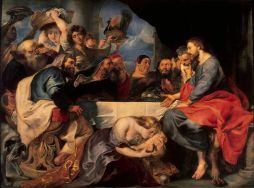 And here is the shadow of all the life, love, goodness and light in the preceding texts. Jesus, in whom all this is embodied, is opposed by the very guardians of this tradition. The problem is they have built so many walls around these precepts that they are no longer recognisable. The harshest words of Jesus are reserved for those who are so dedicated to enforcing the keeping of invented rules and regulations that the essence of receiving the gracious invitation to the fullness of life has become inaccessible.
