Packing to move house is like an archaeological dig. Every now and again as you negotiate the “toss” and “keep” piles of stuff, you come across something that says “pause”. Today I discovered a journal I began to keep when I was considering acceptance of the call to train for ministry. It nearly went on the “toss” file because it’s hidden behind a cover that says “English Exercises”. The first entry is dated 16th March 1969.
It was sober reading depicting my struggle with the issues of discernment for both the faith journey and the times. My horizons were quite narrow and unashamedly and rudely evangelical, even though I had been formed in a broader representation of Churches of Christ. At the same time, I struggled with a recognition of this something that sat awkwardly, attempting to filter strident influences from other sources through what my fledgeling faith discerned as a gospel of love. My reflections on whether or not to become involved in the Vietnam Moratorium Campaign predicted my future journey into a gospel pacifist outlook, even though I sought leadership from the churches in vain.
Now, as I near the end of sustained involvement in church ministry life some 49 years later, I see that while I have changed much, much is still the same. To be sure, I move through difficult circumstances and challenges with more poise, dignity and authenticity than then. But the questions still remain, the search for a genuine expression of the gospel of love amongst the people I am called to serve, wherever that may be. My greatest caution is to not stop the questing, for I have come to understand that the answer is in the never-ending question. So it looks like Wondering Pilgrim must continue his journey!
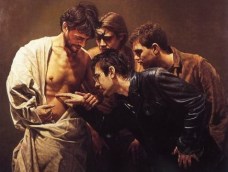 Yesterday was my 43rd Thomas Sunday since ordination, meaning that I have possibly preached this many times on
 Atonement Day on the ancient Hebrew calendar marked the day that two goats were brought before the community. One goat was ritually slain, the other, the scapegoat, having had the sins of the community laid on it, was set loose into the wilderness, not to knowingly be seen again.
 Today begins the three days of Easter.
 In the closing phrases of his first letter
 Of all the Gospel accounts of the crucifixion, Mark’s seems to dwell at some length over the details of what happened to Jesus’ body immediately following his death.
 Wondering Pilgrim