… increased in human favour..

continuing transition to retirement

christmas-party-2008_2008-12-07_0057_edited-1Seeking human favour always carried amber warning lights in my ministerial formation. We’ve seen too many examples of fall from grace in the political arena – and church leadership ain’t far from politics!

Yet Luke’s gospel speaks approvingly of Jesus increasing in human favour.

As an Enneagram Six, I am naturally inclined to seeking human favour. In my earlier unaware state, this did me little favour indeed! Compliant, secretive, anxious, afraid of criticism – I was the company “yes” man! While serving my instincts for survival in the human jungle, I quickly discovered this didn’t work in the areas that really mattered – deep relationships with others. Worthwhile ministry quickly plunges one into this territory.

Integrity and transparency were the traits to which I had access to cultivate. They served as antidotes to my unconscious self-preservation strategies. The motive of currying favour to serve myself began to transform into genuine service of others. I don’t see this dynamic receding during retirement.

Reflection on this four-fold increase in Jesus’ development as described in Luke 2:52 suggests that wisdom, stature and divine and human favour are inextricably linked.

In retirement, they can be expressed as goals against which one may establish measures (I refuse to call them KPIs!)

Wisdom – maintain a reading, workshop, lecture program
Stature – work to physical, health and collegial regimes
Divine favour – set regular times for contemplation and continuing spiritual formation
Human favour – continue to seek out opportunities and avenues for service and socialisation.

This is why retirement is looking more like refirement!


… increased in favour with God…

… continuing transition into retirement thoughts …

stellar-jetEveryone thinks clergy have some secret hotline to God. How does a retiring one increase a state that is already deemed to be “perfect?”   Let’s lay that myth to rest.
To borrow from D T Niles’ aphorism, I have always seen ministry as “one poor beggar sharing with another where one can find an abundance to eat.”

Having said that, I am careful not to fall into the Western trap of striving to find favour with God, as if I have to earn points for good behaviour. The text from Luke 2:52 suggests a journey of awareness into the favour that God already bestows, as indicated in the eastern orthodox emphasis on “theosis” referred to in my previous post. Growth of awareness in itself stimulates the cultivation of the hidden fruits of divinity emanating from the image of God in our being, and fully revealed in the God-human, Jesus the Christ. When Jesus was baptised by his cousin John, the voice he hears, “This is my Beloved, in whom I am well pleased,” is available to be heard by us all.

While western consciousness dwells on humanity’s sin and fallen-ness, though real and devastating and evoking rightful humility, neglect of the perspective of theosis warps our understanding of being in favour with God. There are, however, helpful streams of Western Christian spirituality that, seen through the lens of theosis, build unspoiled awareness of God’s favour (sometimes described as grace – the benevolent disposition of God towards God’s creation – including us!)

The holiness tradition of the revivalists, the contemplative practices of the monastics, the charismatic expressions of the renewalists, the sacramental and liturgical movements – all have contributions to awakening and deepening awareness of God’s favour.

In ministry, it has been my task to respond to and foster all  – as every expression can be found even in one small church community. I don’t see this journey coming to completion, even past full-blown retirement.

… increased in stature…

… continuing transition into retirement thoughts …

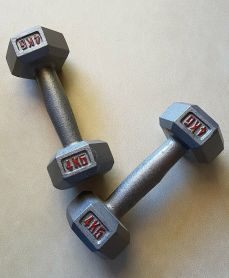
barbellsStature – now there’s a giggle. The transition has been lifelong – from the skinny, gawky unco-ordinated youth to what I overheard someone describing as that “round little man.”  It seems my stature increase has been outward in all the wrong places rather than upward. Daily moderate exercise and lean eating have done little to modify such a transition, yet I continue to attend to both. Sometimes one just has to flow into one’s genes.
There are other ways of attending to stature, however.   There is financial stature, and I am grateful that I was pointed early to a healthy and generous superannuation scheme presided, over at that time, by our national body of churches. It will cover accommodation and a modest income for us both, perhaps eventually augmented by a pension.

There is the reputational stature painstakingly built over decades of ministry and interaction collegially and ecumenically. It will be important to continue to nurture those connections.

Robert Louis Stevenson reminds me that even these are not the sum of the stature to which we are called:

 We must accept life for what it actually is – a challenge to our quality without which we should never know of what stuff we are made, or grow to our full stature.

Sober words with which we are invited to not only assess and accept the nature of our limits – but transcend them!

Theosis – a truer perspective

Discussions with Eastern Orthodox folk awoke me some time ago to the core Christian perspective of theosis, however – and this is how I would now measure stature. We in the West have inherited an unhealthy preoccupation with the Fall, becoming somewhat obsessed with an Augustinian awareness of a deep plummet from grace. A lot of our Christology and soteriology is focused on dealing with humanity’s flaws. Such a focus has given legs to powerplays and abusive policy at the highest levels of church and state. Theosis simply reasserts the presence of the Divine Spark in humanity, and the call through the Christ to grow into the image of the Creator of all things – a call to grow into the stature of divinity – a never-ending journey that goes far beyond what we artificially call retirement.

“The glory of God is [us] fully alive” – pronounced, Irenaeus, a second-century Father of the Church. Far more can be said about this.

But for now, this call to keep increasing in stature excites me!

…increased in wisdom…

books

… continuing thoughts on transition from full-time work to retirement.

Even as I downsize the library I have collected and maintained over several decades of ministry, I contemplate how I will maintain an inquisitive and searching mind that is keen, not only to store information, but apply an accumulation of knowledge and experience in that unique formulation that approximates wisdom.

It’s not only the books, some of which today I snuck back having disposed of, but the memories, conversations and transformations to which they contribute, that make the continuing journey towards wisdom enticing.

It will be important to keep this going when I hang up my boots in June. I’m in three book groups now. I’ll keep going to two. I’ll keep abreast of reading in my focus area of spirituality, with an emphasis on the Christian tradition. I’ll sign up for an online course for something I’ve never done before.  I’ll maintain my practice as a Spiritual Director where I continue to learn so much from those I accompany. I’ll be open to speaking and workshop engagements should they fall my way. Indeed I’ll maintain an open stance to any possibility that arises.

In fact, perhaps the basis of wisdom is simply paying attention! May curiosity continue to be a sharp and active trait.


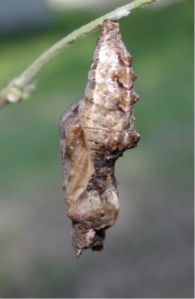
2018 – a time of transition begins


Chrysalis5504
By Pollinator at the English language Wikipedia, CC BY-SA 3.0, https://commons.wikimedia.org/w/index.php?curid=110683

Yes, this is the year that will see me cease earning and have Jenny and I living off savings for the rest of our natural life.


My life as an earner began as a skinny bespectacled 13 year old selling iced finger buns door to door in Adelaide’s northern suburbs. I would arise early Saturday mornings, ride my creaking bike 10 km to the mum and pop bakery and there, with other eager youths, among the flour and fly traps, pack the freshly baked and iced buns into trays ready for delivery. We would pile into the back of the boss’s ute, ready for a wild ride to be spotted strategically around the suburban streets. By early afternoon we would be collected, paid according to our sales, and then the weary 45-minute bike ride home. Since then I have clerked, retailed, packed, stored, painted, gardened, demolished, swept, and then, for the bulk of my working life, served as a Churches of Christ minister in Victoria, Western Australia, South Australia and the Australian Capital Territory.

In June, a new chapter begins. Retired or Refired? Employment under a contract may cease, but vocation will continue.

On this first day of a year of transition for Jenny and myself, my mind recalls the mantra drummed into my growing years of maintaining a balanced life based on a text repeated in yesterday’s service commemorating Jesus’ Presentation at the Temple.

And Jesus increased in wisdom and stature and in favour with God and man. (Luke 2:52)

So, over the next few entries, I will consider what the transition may look like vocationally. How will our minds be engaged? How will we continue to maintain and develop our physical resources? How will we nurture spiritual growth? What will continued social and human service look like?

And, importantly, how will we and our current faith community at Wembley Downs, where our identities are so intertwined,  navigate the changes ahead?

Tradition

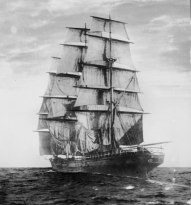
cutty_sarkAt its best, tradition is like a tall sailing ship, navigating the uncharted narrow shoals of postmodern times. Its cargo is the virtues and values that create civilisation. From time to time, its crew has found it necessary to discard outdated, redundant and no longer serviceable jetsam. To navigate unknown shallow waters, the art of “kedging” or “warping” is applied. A dinghy rows forward a small anchor attached to a hawser while simultaneously sounding the depths. The mother ship then hauls itself forward. Rinse and repeat. In this way, the good ship “Tradition” makes its way forward through brave new worlds. When done well, such tall ships are feted and celebrated.  (I am indebted to Leonard Sweet and his book,  Aquachurch (Group Publishing, 1999) for this helpful concept.)

Fragrance

Because of the fragrance of your good ointments your name is as ointment poured forth

Song of Solomon 1:3

feed5000Across the spectrum of Christian spiritual tradition, from the sacramental to the puritan, fragrance has described the beauty and intimacy of connection with the Divine.

I recall in 1991, visiting the shrine of the Feeding of the Multitudes in the Galilee district. It was on a lonely hillside overlooking the famous biblical body of water. I was suddenly overcome by the powerful aroma of freshly baked bread – a childhood memory that had become almost tangible to touch and taste.

One of those once in a lifetime mystical and numinous experiences? Or the unlocking of that part in my brain where memories are stored?

Whichever, it is an experience and fragrance I remember, savour and treasure.

Harmonise

Is the universe typified by chaos or harmony? Ancient societies in the Mesopotamian cradle of civilisation theorised on chaos – hence the justification for violence and conquest.  The Abrahamic faiths, introducing monotheism,  pushed back with a view of order and visions of harmony. Philosophies continue to compete in all the human disciplines – fundamental apocalypticists vs present world peace seekers, rationalists vs poet-scientists and all the spectrums in between.

Can harmony emerge from all this randomness?  Is there a singularity?
Then there’s this –

Gate

gateA friend last week reminded me of the time, some years ago,  I saw myself as a boundary rider, looking for and mending holes in fences. It probably suited my maverick-like approach to my work, seeking to be a part of but apart from the communities in which I participated.

Upon reflection, the boundary rider still rides, but his tasks have changed. He rides the fences looking for closed gates. He opens them wide. Some open easily on well-oiled hinges. Others are rusted with corroded padlocks that can only be removed with bolt cutters or an angle grinder.

Gates – they can keep people in or let them through.