I’m missing engagement with the Revised Common Lectionary. I’ve lived and breathed it the 47 years I was in formal pastoral ministry. So here’s a quick glimpse at what’s coming up this Sunday.
1 Kings 8:(1, 6, 10-11), 22-30, 41-43
A high moment in Israel’s story. Under Solomon’s reign, the first Jerusalem Temple is completed. Solomon’s prayer of dedication eclipses nationalism through a particular petition that the foreigner may find inclusion here – a particularly poignant point as news comes through that Australia’s Home Affairs Minister, the overseer and architect of our notoriously cruel and inhumane “border protection” regime, has resigned.
Psalm 84
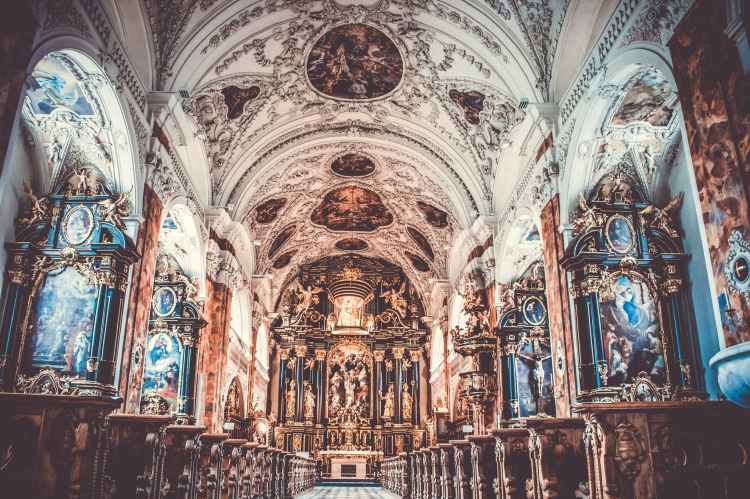
This is a hymn of praise often used in the dedication of buildings erected for public worship and draws on the elation of those pilgrims who have ascended the Temple Mount of Jerusalem and entered its courts with praise and thanksgiving. The content of the text, however, draws attention away from bricks and mortar and focuses squarely on the affirmation of being orientated to God’s presence wherever we are.
Ephesians 6:10-20
“Put on the whole armour of God…” I recall the huge Sunday School anniversaries where we children, arrayed on Meccano-like tiers, watched a presenter dress a lifesize cut-out of a Roman soldier with helmet, breastplate, sword, shield and sandals. I think we learned more about ancient battlefield dress than what the metaphors represented – an ever-present alertness and preparedness to give account for the new way of being human together through Christ’s transforming intervention.
John 6:56-69
And so closes the lengthy “I am the Bread of Life” discourse. Jesus has given his hardest and most central teaching, often aligned with the mystery of the Eucharist. We are nourished by consuming Jesus as the Christ totally into our being – symbolised by “eating his flesh.” Not cannibalism, but a total merging of our conscious and unconscious entity with that entity that is Jesus in a way that he actually consumes us through our consent. A hard teaching indeed and many followers leave Jesus at this point. Jesus asks his close circle if they will also leave because of this teaching. Peter replies with the well-known response: ‘Lord, to whom can we go? You have the words of eternal life. We have come to believe and know that you are the Holy One of God.’
 Yesterday I listened to a Roman Catholic priest address an ecumenical but predominantly Roman Catholic gathering on Baptism and Meditation. In illustrating the practice of meditation (properly “contemplation”) as an act of creating hospitable space for us to become aware of God’s constant hospitality towards us, he described how, following his full observance of the exhausting yet rich rites of Holy Week, including Passion Friday and the Easter Vigil, he sought refuge from liturgy and theology by attending his local Church of Christ, where he could simply “be.” He knew the minister, yet the church was large enough for him to be lost anonymously in the Easter Sunday crowd (or so he believed). Nevertheless, he was overwhelmed by the hospitality offered him as an anonymous visitor. He said this is what it is like to live out of our baptism which has more to do with relationship than correct liturgy and theology!
 Yesterday was my 43rd Thomas Sunday since ordination, meaning that I have possibly preached this many times on
 Atonement Day on the ancient Hebrew calendar marked the day that two goats were brought before the community. One goat was ritually slain, the other, the scapegoat, having had the sins of the community laid on it, was set loose into the wilderness, not to knowingly be seen again.
 Today begins the three days of Easter.
