Model railways are cool again? (via sabrage)

This is what would happen if I let my head go!

Model railways are cool again? Seriously cool. I want to rampage through its streets. My dad built model railways – after he and mum spent thousands extending our house so we could have a rec room, he took over the table tennis table in it and built a model New Zealand bush mining town with people tending to tiny little cabbages in their teeny gardens. I think that was his plan all along. … Read More

via sabrage

Churches combine for Pentecost Eucharist


A quick sneak pic of part of the Pentecost crowd at our combined Wembley Downs churches Eucharist comes out all blurred and wrong, but strangely evocative of the great occasion where the Holy Spirit descended upon the crowd in Jerusalem forever altering perspectives and shifting paradigms of people everywhere in perception of the Creator’s interaction with us. The Anglican, Uniting Church and Churches of Christ congregations habitually come together on the day of Pentecost for this celebration. Today, the Revd Tara Curlewis, visiting Perth in her capacity as General Secretary of the National Council of Churches, preached the Pentecost message.

What do I think of this…?

Doubting Thomas strikes again and I am caught on the horns of a dilemma.

As an Easter person, I would dearly love to hear political leaders who also claim to be Easter people spell out the rationale of their party policies and how they line up as practical expressions of the reign of YHWH in a such an eclectic society as ours. I am particularly wary of the way the church can find itself sullied by being chained to party political agendas of both the left and the right. While it is commendable that Christians, more than ever, are exercising a right and a will to be engaged with politics, it is a matter of great concern to me that many do so in a way that is unreflective and unquestioning of the the manipulative strategies of the political machine.

Be “wise as serpents and gentle as doves” Jesus advises us.

It’s best that we lay aside the anachronistic “Christendom” model that many of us erroneously operate under. For all the foundational influence of Christendom, we are not a Christian nation but a secular one. This realisation can free followers of the way of Jesus enormously. Change in society runs deeper through transformation than legislation. We often make the mistake that legislation will lead to the changes in society that we seek. History reveals that legislation serves best when it responds to the transformation of the collective heart. The abolition of slavery as an economic necessity is the oft quoted example.

The church became politically powerful under Constantine, giving rise to the legislative might of Christendom. Many say that this was the beginning of the Church losing its soul. It became fat and lazy, losing the impetus and passion of the frontier movement of God’s realm. Political expediency rather that the “way of light” became the polar star. Those who continued to speak truth into this state of affairs were the social commentators of the time – prophets and contemplatives, men and women who immersed themselves in the silence of the desert in order to discern and hear what the eternal Word was for their contemporary time.

So, I guess I’ll register to hear what the leaders of our two main political parties have to say to us. Both are practicing Christians who have enormous expectations laid upon them by those of Christian faith, other faiths and no faith at all. The practical outcomes of their personal visions often appear to be at enormous variance  with these expectancies. For this reason alone, Christians ought to seek understanding in order to “pray for those who rule over us” more intelligently.

But this isn’t the only thing. Many are the avenues for engagement with the political process. To the degree of our passion, clarity of vision to what and who we are summoned to be, our talents and abilities, societal transformation is within each person’s grasp.

Facing the Future in Zimbabwe

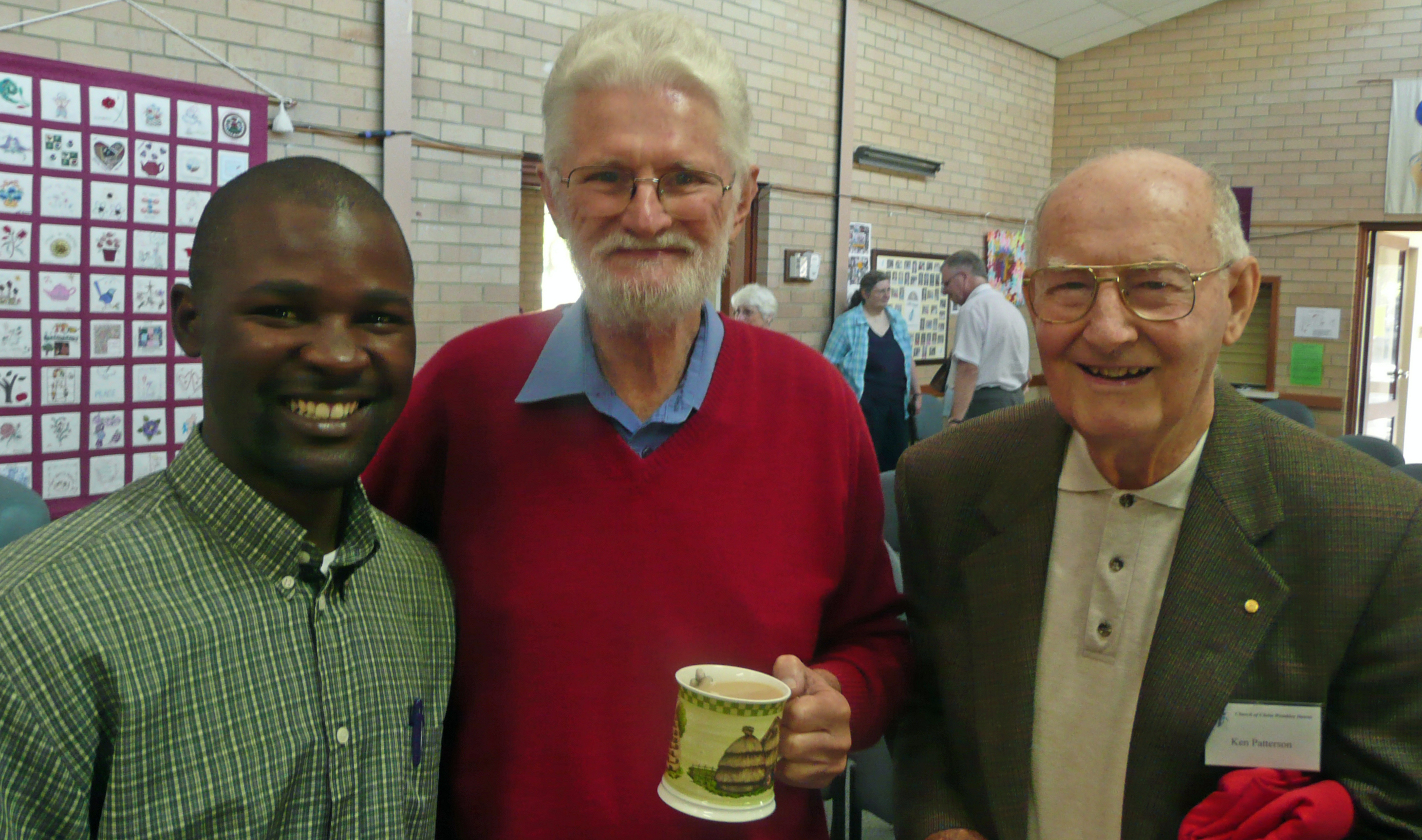
Antony Dandato with Denis Ladbrook & Ken Patterson

The hope for Zimbabwe lies in its future leadership, well-educated and founded on the trust that is realised in the gift of the gospel of Christ. So claims Antony Dandato, representing the  Fellowship of Christian Unions in Zimbabwe (FOCUS) speaking at the Church of Christ Wembley Downs during an extended visit to Perth. The goal of FOCUS is to unite and equip tertiary students from a variety of campuses and Christian traditions for leadership in their various fields  in the hope that Zimbabwe social and economic life has seen its worst days and is ready for fresh beginnings. From the sound basis of values and consideration for others based on the good news of Christ, Antony believes that Zimbabwe and many other African nations can build a solid future.

Antony fielded a Q & A session with the congregation, highlighting the value of longterm leadership preparation as the most effective strategy for rebuilding his country.  The congregation would also know through previous visitors from Zimbabwe and the church’s support of the Khayelihle Children’s Village that this view is widely shared amongst Zimbabwe Christian leaders.

Antony is keen to share news of  how Christian students on university campuses in his country can combine their efforts in contributing to Zimbabwe’s future.

The Book of Eli

The Book of Eli joins the current spate of post-apocalyptic films, perhaps riding high on the uncertainty of the times. Is the strong violence gratuitous or meant to give expression to the ultimate manifestation of dog-eat-dog society? Are the motives behind hunger for possession of the sacred book aimed at self-aggrandisement or service  of others? These questions and other metaphors that arise in the telling of the story seem to be suitable for contemporary times, not just an imagined future. Make allowances for Hollywood sentiments and characterisations and you may find yourself thinking about the film longer than an hour after leaving the cinema.

Congealed Life?

Is your money “congealed life?”
Would you describe your job as “hanging around burning bushes all day?”
Are you a “guard dog” or a “bird dog?”

So many arresting thoughts in one short email courtesy of the daily log  by William P Young, author of “The Shack”

Subscribe to it at Windrumors | The Official Site of Wm. Paul Young, Author of “The Shack”

What a way to end the dry spell!

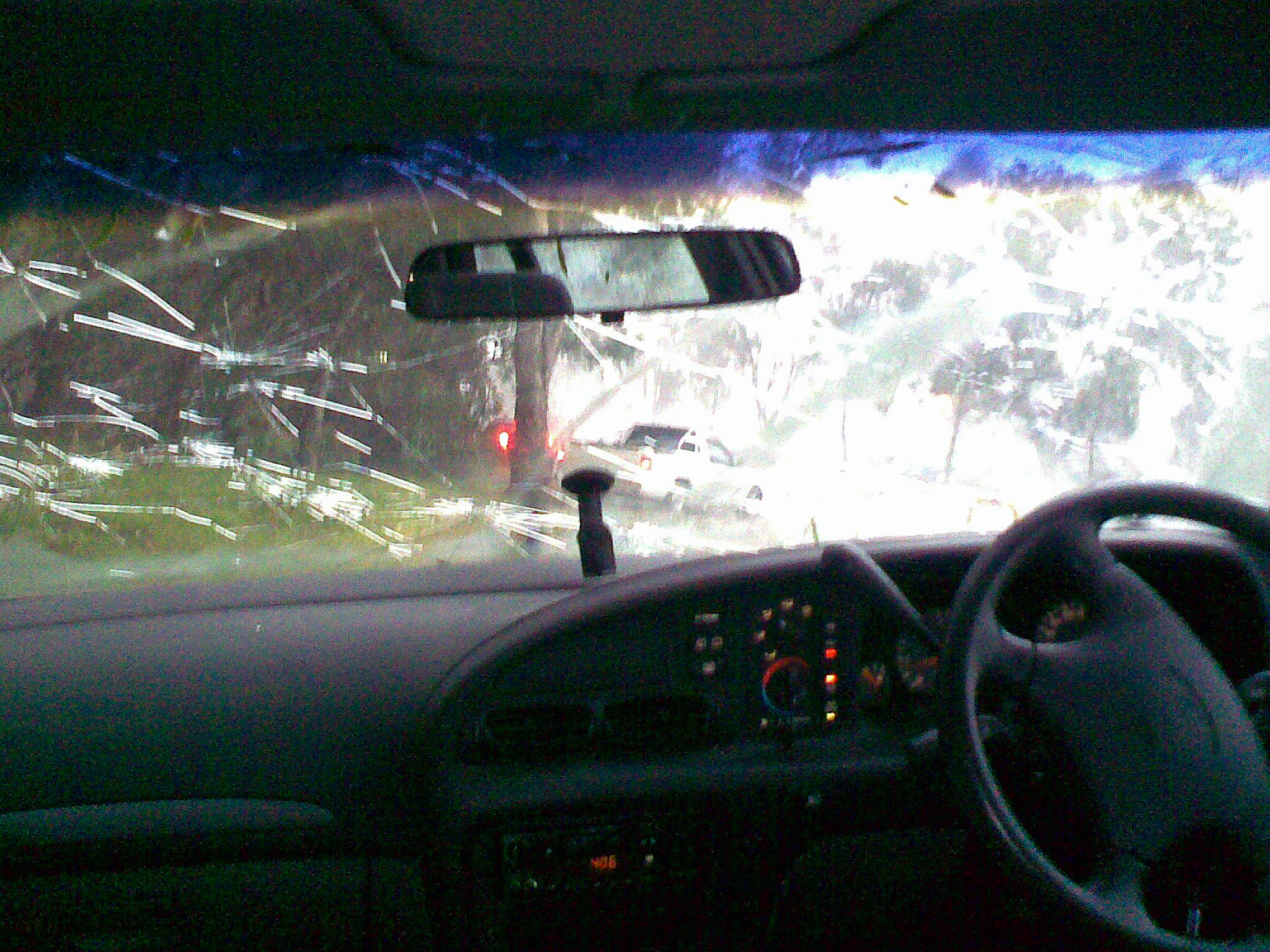
Athletically ducking for cover into the backseat (after pulling over) as hailstones the size of golf-balls shatter your windscreen! Big panel beat ahead for someone but I suspect insurance will write the old Ford wagon off. I crawled home, peering through cracked glass, to find my beloved mopping up a flooded kitchen. Home and office phones both zapped by lightning but a modem survived. Perth traffic remains in chaos. Bits of King’s Park are sliding down into some high rise apartments at the base of Jacob’s Ladder. Perth may match Melbourne of two weeks ago in the spectacular and destructive storm stakes.

Compulsory Income Management

This morning’s article in Eureka Street scratches an irritating itch. On behalf of my local church, I receive occasional calls to help out families on hard times. My training has me quickly assessing the level of need, its genuineness and the appropriate response. Often it’s the choice between organising a food parcel or accompanying the person to the supermarket and saying “OK – get what you need to the tune of $xx” I’m far more comfortable with the first option – I maintain control and I decide “what is good for the other.” The second option is scary. It’s “unprofessional”; I have ceded control; the person’s choices will most certainly not be my choices, they might even go over the limit I have set. Yet this is often the choice I take. Why? The person’s dignity and sense of self in these instances seems to be as equally important. I note that the local food bank we support also majors on the “dignity” principle as it provides refreshments and conversation to those who come to make up their food parcel. The Eureka Street article highlights the contrast between sound economic management in government offices and the human interface of welfare agencies that oppose compulsory income management on the very grounds I have mentioned.

In my local church setting, I have noticed our most stringent economic managers soften and bend and become most generous and self-giving when face-to-face with genuine human hardship. Perhaps the proposed implementation of a wider policy on compulsory income management might soften if administrators and policy makers spent more time on the front-line with welfare and community development workers.

Port Power – on and upwards!

This is how all the Eagles fans in my congregation will be greeted this morning. They were merciless last week, anticipating a huge knockdown in last night’s NAB cup. It was a knockdown all right – but the other way – 78 points! As much as  I rant against tribalism, I can’t expunge Port Adelaide from my genes, so I will say nothing apart from wearing my new liturgical dress.