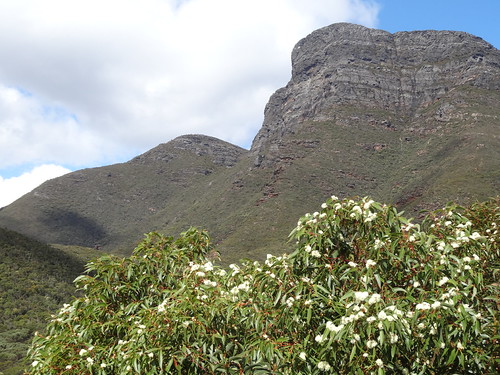
It happened on Christmas Day in ‘ninety-eight A once-in-a-lifetime event! Western Australia’s only “White Christmas” at the height of summer. Not just a light dusting Twenty centimetres blanketing the summit Two years before a new millennium Harbinger of stranger things!
(c) Dennis Ryle, January 2026
This is in response to the dVerse Poetics invitation sent out by Kim. It is inspired by snow as an accompaniment to new beginnings, inspired by the turn of the year. Well, not much of that in a hot Aussie summer – but there was that one occasion. And Christmas is close enough to the New Year to count.
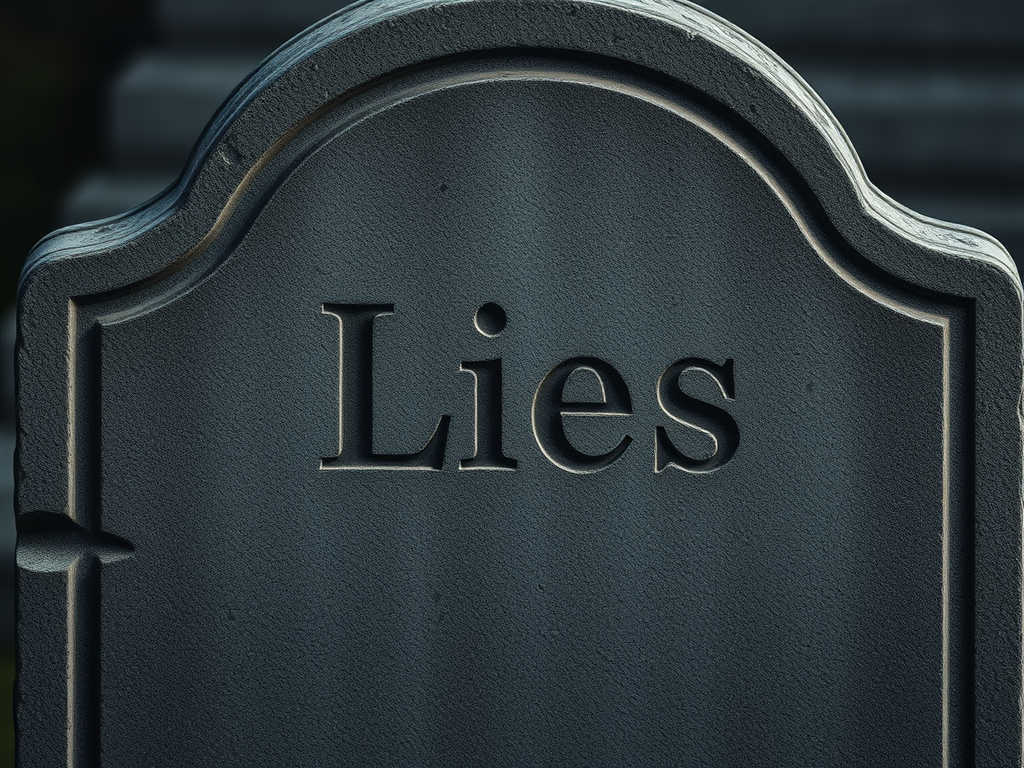
Lisa invites the dVerse community to take a line from the song “Bury Me,” by Alejandro Escovedo . The task is to write a 144-word “prosery” piece using the exact phrase Bury me with lies I told. I am delighted and somewhat energised to rise to the challenge!
Bury me with lies I told, as into these baptismal waters I descend. Falsehoods of worthlessness and self-negation. Chains of caution and inadequacy. Suspicions of motives and projections of intentions. Standing watch against imaginary phantoms. Scanning horizons for absent adversaries.
I sink beneath the surface, buried with Christ and all the lies I told myself.
And I arise anew! No more chains, for they were buried with my fabrications. New purpose breaks forth as unsourced light divides the dark mystery. Tendrils of the old lies sometimes writhe and search from the old musty graveside. They are weak and cannot hold. The light burns and they shrivel. They retreat and wait for yet another faltering step, when they might attempt to take hold again. But they have taught me well. Discerning caution and courageous guard can serve the Light equally well. This is daily work!
Melissa from Mom With a Blog is our dVerse host right now. She is immersing us in Johnny Cash’s Folsom Prison Blues, trusting it will inspire our muse. Here’s my melancholy effort. Please don’t counsel me, I’m trying to sit within the skin of another!
He came to spring captives free That young rabbi from Galilee But maybe I prefer these bars Within them, I can nurse old scars Yet still peer up to the stars.
Somewhere, a train whistle moans Its echo vibrates through my bones Mournful, ‘cos though freedom is its way Safe routines keep us prisoners at bay So it passes by, while we choose to stay.
Smile! – What if I don’t feel like it? Write a poem about it – a quadrille – exactly forty-four words! The rebel arises within me. So many fake smiles crowd memory’s vault Concealing assassins’ intent. Besides, I have a missing front tooth My smile appears uncouth!
(c) Dennis Ryle, January 2026
De Jackson (aka WhimsyGizmo) points out it’s the first Quadrille Monday of the year at dVerse! “The Q is my fave, and today I thought we’d just try starting the year off with a SMILE.” I smile a lot when prompted from within – but never from external urges! I guess my quadrille reflects my inner rebellion on many things – and it was somewhat cathartic to write! Grumpy Old Man is this morning’s muse!
A New Year venture awaits Begging towards taking up pen Calling projects forth from fevered mind
Dickens started it all Energising my adolescent Curiosity Shop Fanning flames that fired imagination
Great Expectations glowing with anticipation Hard Times intervened I reluctantly laid pen aside
Just as I had given up all hope Kilburn school opened an opportunity Leaning into new learning
Mastering turns of phrase Never looking back Opportunities began to beckon
Positioning myself anew Questioning old paradigms Revising tired old plans
Stimulated by fresh calling Travelling into brand new territories Unpacking stale expectations for new expectancy
Vexations aplenty Worries about untried trails Xenos of spirit hosts me through
Yearning towards completion Zephyrs urge me on.
(c) January 2026 Dennis Ryle
Our host today at dVerse – the Poet’s Pub is Laura, inviting us to try an Abecedarian and write a 26-line poem, each line starting with the next letter of the alphabet. The letter “X” is always tricky—it’s tough to go beyond X-rays and xylophones without reaching for something unusual, but I’m fond of “xenos,” a word that captures the spirit of ancient hospitality.
Dark, grey, tinted, large and ominous, the plate reads 01DRAGON, its gaze catching mine in the mirror of my headlamps. This minotaur lurks at a red light, where the chaos of the unfinished Stirling Mitchell Freeway Interchange— labyrinth or maze?— frustrates those who travel, longing for a clear path, avoiding Innaloo rat-runs, steering through roadworks, ducking Cedric Street tree-lopping. My small, battle-scarred Kia, its cracked dashboard whispering pedigree and possibility, locks eyes with its quarry. The light flips green. The beast slips away. And we surge forward into freeway freedom.
This poem seeks to respond to Dora’s dVerse challenge to write a piece in the style of Elizabeth Bishop – emulating her characteristic style of accuracy (detail), spontaneity (immediacy), and mystery (revelation)
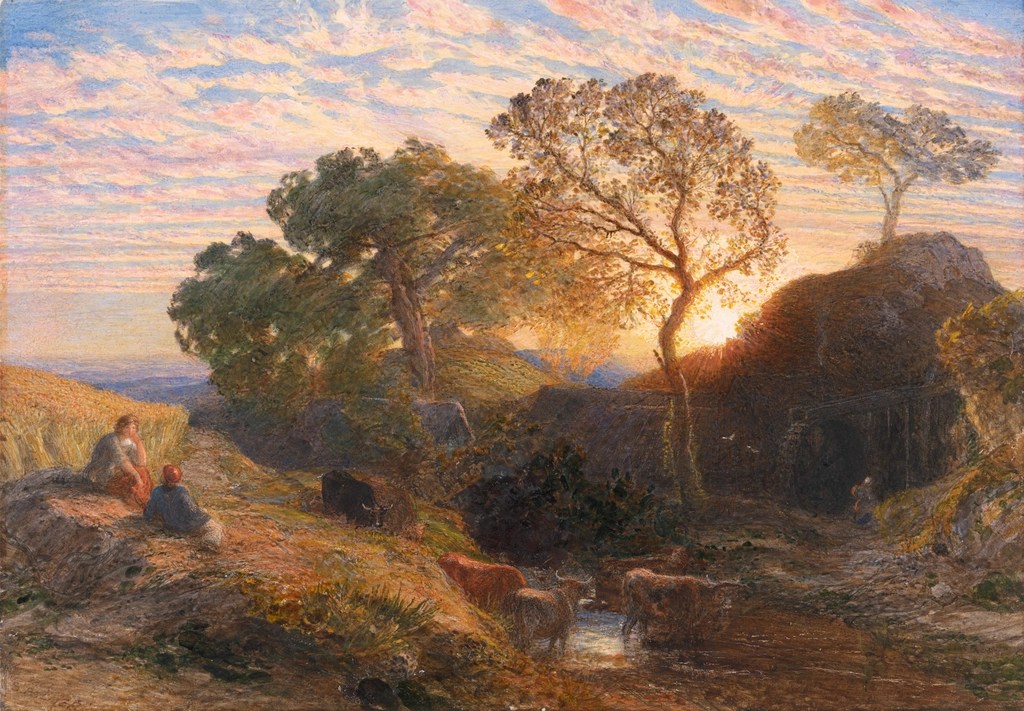
Samuel Palmer, Sunset (ca. 1861). Yale Center for British Art. Public Domain.
Stranger Things hints at dimensions that are closer than our own breathing. The mood is dark, sinister and compelling. The world as we thought we knew it is transforming. Thin places once hinted at glorious light. Now they also open hazards, concurrently concealing and revealing the dread of the yawning abyss.
Yet another dimension, more ancient, more new, more true, invites discovery, often hiding in plain sight. It is the stance of attentiveness that receives it. Cultivating capacity for awareness fleetingly opens its portals. Our feet tread infinity. Our hearts burst with an incomprehensible passion. Our eyes are all but blinded by a light that is beyond all light.
Once, long ago, ancient astronomers traced a new star. It led to a place where this dimension burst into open and persistent perception. It continues to hide in plain sight!
Vision of glory A gum tree shining with light Evokes tears of joy
This piece was created in response to an invitation from dVerse to write a haibun on Epiphany. A haibun is a brief composition made up of several paragraphs of prose, ending with a haiku—three lines of poetry in the 5-7-5 pattern that reflect the current season.
In the days after the Bondi massacre, Australia found itself suspended between shock and solidarity. The beach, usually a symbol of ease, openness, and shared life, became a place marked by absence. Towels lay where people had fled. Flowers appeared where lives had been taken. Silence settled where laughter had been only hours before.
René Girard helps us see that moments like this are not only events of violence but events of imitation. Human beings, he says, are deeply mimetic: we catch one another’s desires, fears, and emotions. In crisis, this shared vulnerability can bind us together or turn us against one another.
Shared Fear, Shared Humanity
In Bondi’s aftermath, the first mimetic wave was fear, a fear that spread not because people were weak, but because they were connected. The community breathed together, grieved together, and tried to make sense of what had happened. Girard would say that this shared emotional resonance is the beginning of both danger and possibility.
The Temptation to Blame
Girard warns that when a community is shaken, it instinctively searches for someone to blame, a scapegoat who can carry the weight of collective anxiety. We are seeing hints of this in the public discourse: political figures positioning themselves as protectors, debates about extremism and identity, and the subtle pressure to locate the cause of the violence in a particular group or community.
The Bondi response also revealed something deeper: a refusal by many to let fear harden into hostility. Stories of courage, including those from people of diverse backgrounds, helped disrupt the mimetic pull toward scapegoating. The larger community is resisting the easy narrative that violence demands an enemy.
Rituals That Heal Instead of Harm
Girard believed that communities heal through rituals that restore unity without sacrificing someone. In Bondi, these rituals emerged almost immediately:
candlelit vigils
paddle‑outs forming circles of solidarity
moments of silence on the sand
symbols of remembrance carried gently by strangers
the many who joined the Hanukkah tradition of progressive candle-lighting
These were not acts of forgetting but acts of re‑membering — stitching the community back together through shared presence rather than shared blame.
Choosing the Non‑Violent Path
Girard often said that modern societies stand at a crossroads after violence. One path repeats the ancient pattern: fear, rivalry, scapegoating, and renewed division. The other path is harder: it requires truth, compassion, and the courage to resist mimetic hostility.
In Bondi’s aftermath, we saw a community leaning toward the second path when people chose to honour the victims, uplift the helpers, and hold space for grief without turning it into fuel for exclusion. They chose to imitate the courage of those who ran toward danger, not the violence of those who caused it.
A Community Becoming Itself Again
Girard reminds us that crises reveal who we are becoming. Bondi’s response – tender, courageous, imperfect, but deeply human – promises a community that refuses to let violence define its story. Instead, it leans to imitating the best of itself.
And perhaps that is the deepest Girardian insight here: we are always imitating someone; so let us choose to imitate those who heal.
Upon the lands where shadows long have lain, A dawn breaks forth, Isaiah’s word fulfilled; In Gaza’s grief, in Ukraine’s frozen pain, The promise shines where hearts are bruised yet stilled.
The USA, with restless striving worn, And Somalia, where hunger cries aloud, All nations wait for mercy’s tender morn, A shoot from Jesse rising through the cloud.
The wolf shall dwell beside the lamb in peace, The child shall play where once the serpent coiled; From war’s fierce hand, the strife shall find release, And earth be healed where hope was long despoiled.
So Advent sings: the world in travail groans, Yet Light has come to claim all lands as His own.
Prayer
God of Light and Peace, In Gaza, Ukraine, Somalia, the USA, and across the earth, let your dawn arise. Shine into our darkness, heal our divisions, and guide us into the way of peace. Through Christ, the Prince of Peace, we pray. Amen.