Yes – Christians & Muslims can Pro-exist!

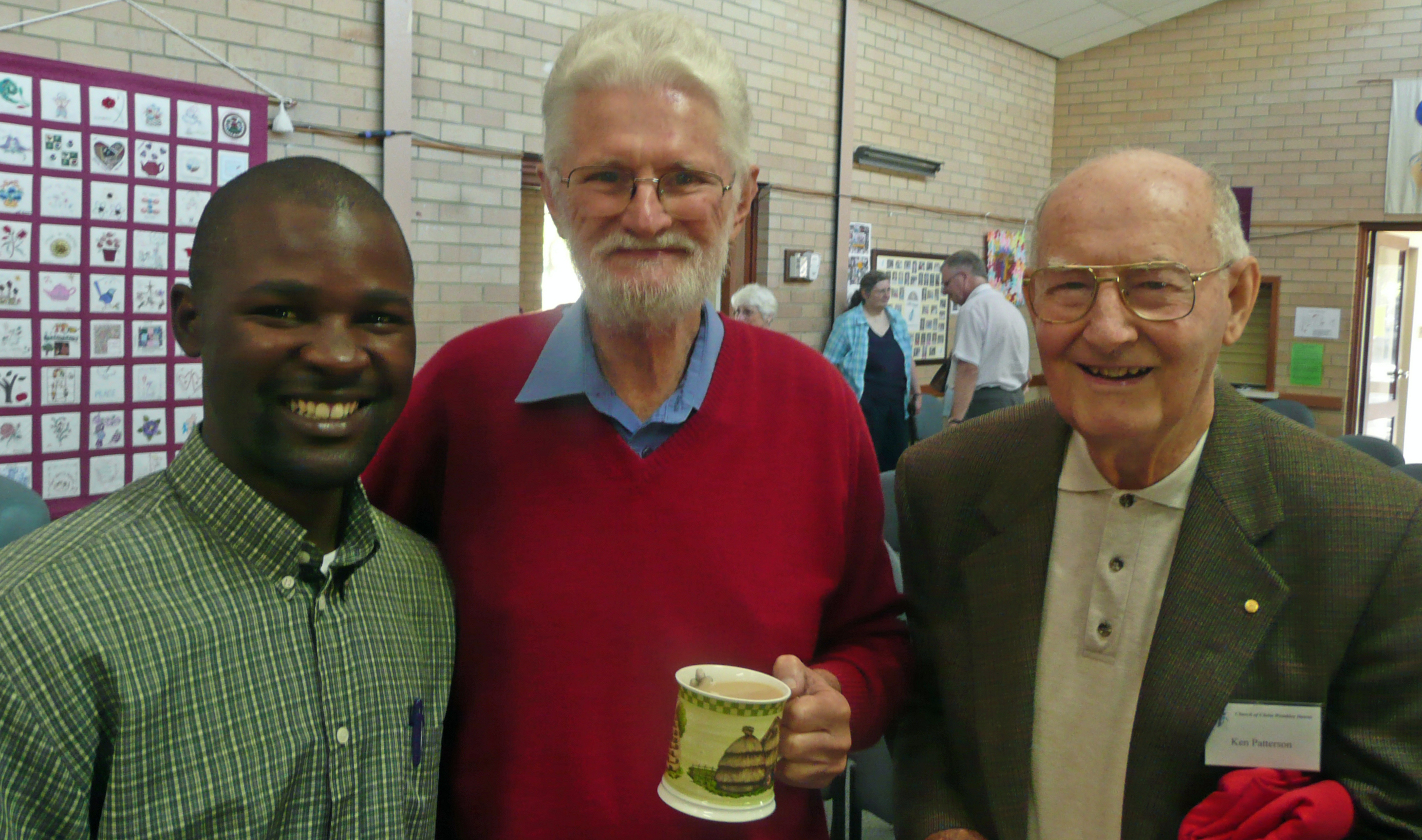
So claimed Toby Keva, Uniting Church student minister who grew up in Indonesia. Toby was one of two key note speakers at this afternoon’s interfaith dialogue Can Christians and Muslims Co-exist in the Modern World. Toby contended that his own experience answered this question where, even in the face of sporadic violence in his home country, it was more the norm for Christians and Muslims to live peacefully together.  “Pro-existence”, Toby encouraged, takes a further step in mutual active support for each other. While Toby gave many instances of this happening in practical and tangible ways around the globe, he believes, from the Christian perspective, that more work needs to be done on intelligent articulation of doctrinal reasons for doing so, particularly where the exclusive and inclusive claims of the gospel seem to be in conflict. He reminded us that every theology is derived from a specific historical context and that dogma needed to be understood and reinterpreted in this light.

In response, Mehmet Ozalp,  author of 101 Questions You Asked About Islam and representing the Australian Muslim initiative Intercultural Harmony Society, concurred, adding that history is replete with epochs of Christians, Muslims and Jews living mutually and peacefully together –  for example, Spain before the 15th century expulsion of non Christians, Jerusalem prior to the mid 20th century and the interfaith House of Wisdom project in medieval Baghdad.  Mehmet proposed education as a key principle for harmonious community living. This involved:

  • raising a golden generation – where the “science of the mind” and “knowledge of the heart”  enjoyed balanced proportion
  • promotion of the values that promoted harmony, ie
    • tolerance (as a starting point)
    • a view of all humans as equal
    • a belief that diversity leads to greater opportunity for mutual education rather than conflict.

This could be achieved by dialogue – listening with the intention to understand and competing in virtue (thus promoting constructiveness in mutual achievement).

Question time revealed that the 100 strong audience had been attentive listeners. One question arose that has often been asked of me, “If Islam is a religion of peace, why do its proponents not publicly oppose the destructive acts of its extremists.”

The answer?

“We put out a press release in response to every reported incident. The frustration is that major media outlets are more interested in whatever is sensational. Our most effective work is with community meetings and schools.”

I think I know where he’s coming from. Christian extremists also get the lion’s share of media attention, but the most effective learning comes through mutually respectful one to one listening anyway.

The gathering was jointly sponsored by Intercultural Harmony Society the Uniting Church in Australia National Assembly Working Group on Relations with Other Faiths.

9781741669046Just bought Don Watson’s new title, Bendable Learnings (Random House). Watson continues his crusade against the pervasive lingo of modern management speak. He’s at his best when he’s poking fun at it. Humour is often the most effective instrument for bursting bubbles of hubris, pomposity and camouflage that uses faux competence to hide mediocrity.

I wonder how Jesus and his disciples would have conversed using contemporary management argot?  Mark 10:35-45 presents an opportunity. See if you can translate it back into everyday English!

The Submission of staff operatives, James and John

Staff operatives James and John, moved forward, and proposed, “Training facilitator, please action a request we will select from a broad range of parameters and submit for approval. “ And he said to them, “What do you want me to action in terms of benefits?” And they said to him,” Create a Key Performance Indicator that grants us an outcome of becoming prime staff operatives when strategy accomplishments are realised.” But Jesus said to them, “Your comprehension platform is sub-standard. Are you able to overcome the comparative tables of potablity and immersion in key performance indicators that are incompatible with management principles.” They replied, “We are able.” Then Jesus said to them, “You will indeed meet the KPIs of potability and immersion, but outcomes of the appointment of prime staff operatives must remain accessible to our total staff and customer base.

When the ten heard this, they began to exercise leverage against James and John. So Jesus called them and said to them, “You assess that amongst the customer base of very broad value pools that chief executive officers regulate entire end-to end governance and that managers pinpoint quality/process outputs with views to strategic termination. But it is not so amongst my staff operatives. Whoever wishes to be a prime staff operative must be a deliverer of basic commodities. For the Progeny of Human Resources came not to receive basic commodities but to deliver basic commodities, and to donate his energies as bonus compensation for the customer base.”

Reporting Back!

Learning how to find bush tucker

Foraging for bush tucker


Our trip took us to the Aboriginal community at Looma (on the edge of the Great Sandy Desert), a mission enterprise in Derby and the indigenous communities of Lombadina, Ngamakoon and One Arm Point on the Dampier Peninsula. There we made our base at Kooljaman, a camping ground and resort owned and managed jointly by Lombadina and One Arm Point. We talked with missionaries, educators, locals and traditional land keepers. We also talked amongst ourselves, reflecting on what we were learning. It was easy to be diverted by the spectacular features of the country we were in ( I’ll put selected photos on Flickr later today). But we anticipate sharing some stories and reflections from our pilgrimage in the morning service at Wembley Downs Church of Christ on Sunday, September 6th.

Picturs now uploaded, not on Flickr, but here.

And you can read a comprehensive journal of the trip at Scott Vawser’s blog (click here)

Listening Journeys

western-australia-kimberley-region-2It’s over twelve months since the Australian nation passed an important milestone – the beginning of a process of reconciliation with  Aboriginal and Torres Strait Islanders with a formal act of apology for the government’s role in formulating and pursuing policies that led to the phenomenon of the Stolen Generations. Prime Minister Rudd’s words of “sorry” rode the waves of the former government’s “acts of intervention” which continue to return a patchwork of results, depending on the degree of consultation taking place with indigenous leaders and members of the affected communities.

All of this forms a background for a project that myself and others have engaged in – “Listening Journeys.” We realised that if we were ever to understand the pain and trauma of generations of loss of culture, language and kinship ties and how this affected descendants of those who lived under a systemic oppression, we needed to guard against involving ourselves with an albeit compassionate knee-jerk “fix-it” agenda and engage in careful respectful listening instead. We have spent the last eighteen months deliberating on how this might best be done and are honestly still looking for some answers.

Today I pack my swag to join four others for a short flying trip to the Kimberley region in the North West of this state, hopefully to engage with some Aboriginal communities. One might ask what such a short visit can hope to achieve. My hope is that I can return with some perspective and a way of speaking not so much with knowledge, but with understanding, of some ways people like me can contribute to walking the road of reconciliation together.

So I’ll be incommunicado for about a week. Here’s hoping the next post will share some experiences and that sought out perspective.

Gimlets, Raspberry Jam, Sugar Gums and York Gums

Yaraandoo_2009 07 11_0689These are the species of tree we planted yesterday at Yaraandoo, a rural property and permaculture farm near Toodyay, about an hour’s drive from Perth. “Not endemic to the area,” we were told. In fact these trees are specific to the the abutting northern region, but changing climate may see them move southward. The exercise was part of a day long contemplative experience on creation spirituality and “the environment as a journey of faith”. Yaraandoo itself is a practical and continuously developing example of such a journey that has taken several decades. Ange and Jeff Sturman, the owners and our day’s hosts, have been developing the property for some time as a positive and proactive ecological statement since some time before the term “global warming” found popular currency.  As a retired environmental scientist/engineer and Anglican priest, Jeff is well equipped to assist those attending their faith journey to expand awareness towards environmental challenges, offering a taste of a lifestyle that “has a Benedictine flavour, with Ignation lacings, and eco spirituality preservative!” You can see an article on Yaraandoo in the Anglican Messenger (March, 2009), page 20.

Mystery at Wembley Downs

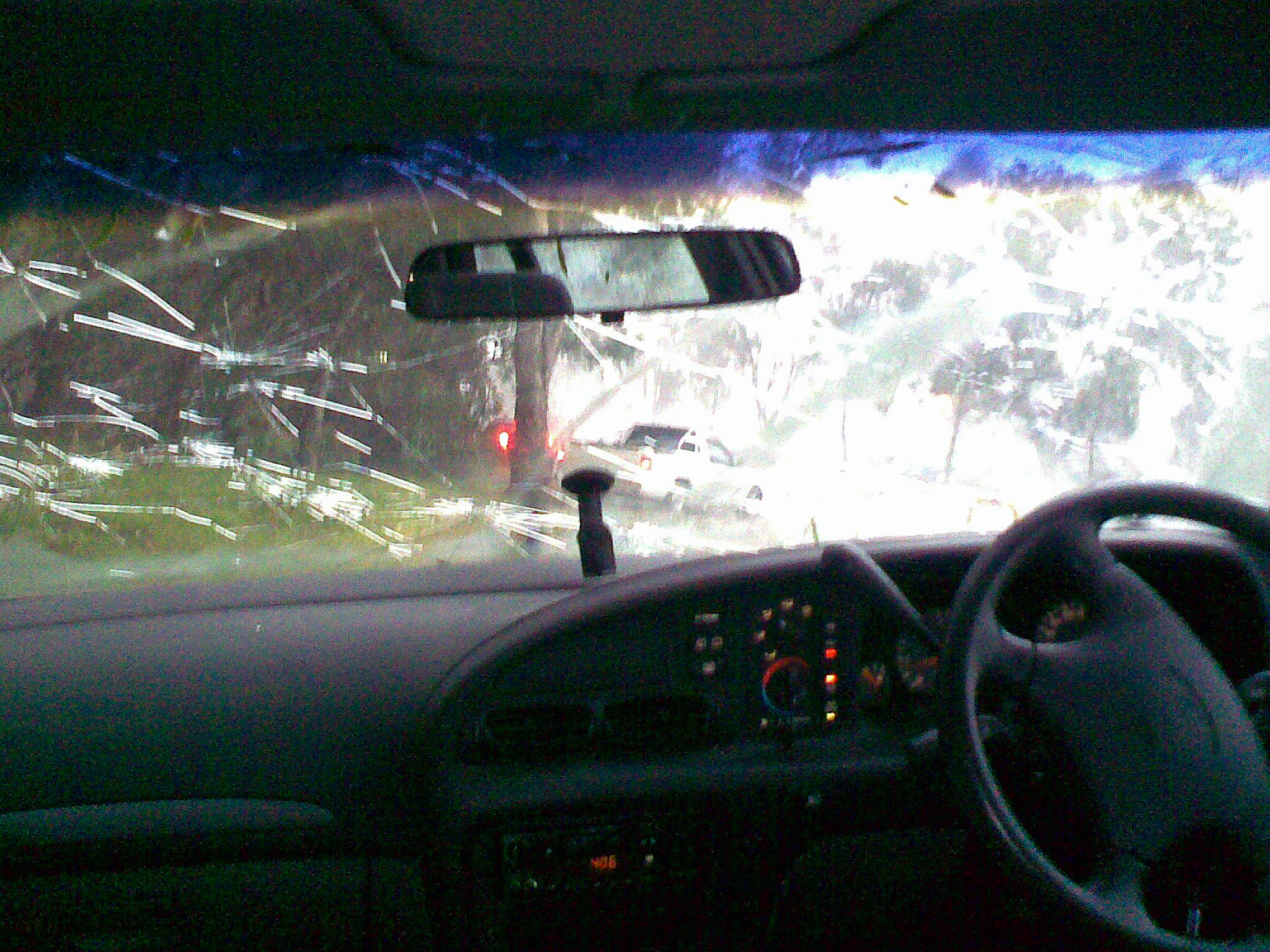
The RAC traytop was off-loading my wife’s disabled Colt last night. It was behind the church, where she usually parks the car. The tray had just lowered the vehicle, when some loud shouts made us look up. Torch lights were bobbing towards us from the road reserve. Behind the lights loomed two characters, running full pelt toward us, shouting. We braced ourselves, not knowing what to expect – and they ran grunting straight past us – faces red, perspiring freely on this cold winters’ evening. They were in athletic singlets and shorts.

“You can’t get through that way” I shouted.

“This is private property!” my bride murmured.

No response – except about eight more characters, similarly attired, wheezed past us. Seeing our bemused faces, one cried out “Call the police!”
Now I was confused – were they chasing someone? There had been a burglary across the road earlier that day. Was he just having a lend of me? Why were they all dressed in athletics? 
One called out “Found it!”

They turned and ran off in the direction they had come, disappearing into the dark. Who were these people?…

… next morning I found these chalk marks on the ground, leading me to pose several hypotheses

2009 06 09_0555

2009 06 09_0558


  1. They are alien markings, and our intruders are extraterrestrials in search of their lost space craft.
  2. They are portals to a secret chamber where stolen goods are secreted and this was a raid by undercover police disguised as athletes.
  3. They are markers for a local orienteering club out on a practice run.

Maybe, you, dear reader, can cast a light on this mystery. Or you may have an additional hypothesis as to what was really going on here. Feel free to share.

Thin Places Revisited

2009 06 03_0563

Once again some theologs and I met at King’s Park to explore a question that arises from a Celtic perspective of Christian spirituality – “Is King’s Park a Thin Place?”

The escarpment’s close proximity to the CBD of Perth combined with the beauty of it’s bushland setting create a popular tourist spot. It is a place where beauty natural and man-made meet. This can inspire or distract, the noise and sight of the freeway interchange below and the detail of the city skyline is sometimes jarring. In Aboriginal dreaming, where high ground meets water, it is a place of significant sacredness , something that the peregrinato, the early Celtic Christian monks would have quickly discerned and honoured because of a highly developed attentiveness to creation spirituality.

It is often a long journey from the myopia of  our city-bound functional mindset to the inner quietness that awakens our awareness of the immediacy of the presence of the Creator around us. Places like King’s Park, plonked in the midst of our busyness, serve us well in pointing to that reality.

Three local churches join together for Pentecost communion

It’s a tradition in these parts now. Every Pentecost over the last four years we have joined with the Uniting Church at St Paul’s Anglican Church to celebrate Pentecost with an Anglican Eucharist. Everyone wears red and the sharing of communion is a highlight. Here’s the reflection I shared on John 15:27-16:4

As well as the Week of Prayer for Christian Unity that culminates today, we are in the middle of the Week of Prayer for Reconciliation that focuses on Aboriginal Australia. Some of us are involved in the process of planning a series of meetings involving indigenous liaison that includes a weekend retreat and some time away on a Kimberley field trip. We are calling it “Listening Journeys.” For those of us that are action focused, the planning and negotiating is a slow and frustrating process. Listening’s not our favourite game, we want to get in there and fix things. For those of us that are more reflective, it seems more appropriate to apply the brakes rather than the accelerator. We want to ask, why are we doing this? What is the best outcome for all? Should we even go if we are not invited?

Today’s celebration is helpful as we process and receive again the wisdom of the Word.

John’s Pentecost is not focused on a single invasive event as recorded by the writer of Acts. The coming of the Spirit is all pervasive, both at the same time anticipated and realised amongst those who fellowshipped with the pre-crucifixion Jesus and joined others in enjoyment of the companionship of the post resurrection Christ.
John’s writing draws on the memory of Jesus enfleshed – walking, talking, back-slapping, foot-washing, comforting and confronting – living, sleeping, eating and finally dying. But the Easter story tells us Jesus was raised so John’s gospel entices his community and ours to awareness of the same along-sidedness – the Holy Spirit, invoking the presence of the risen and ruling Christ, to encourage, protect, invoke, confront, rebuke and enfold all who are committed to his way.
The emphasis in Acts is, as the name suggests, on action. The events generated by the day of Pentecost set off a flurry of activity. The ministry and proclamation of an emboldened band of apostles draw crowds who are overwhelmed, converted and baptised – there are journeys and expeditions, persecutions, jailings, trials, confrontations – but all along the way churches are planted and universalised to include both Jew and Gentile. By the end of Acts, the presence of those who follow the Way has taken firm root throughout the Mediterranean.
The emphasis in John’s gospel, on the other hand, is on relationship – the intimacy of the presence of the Spirit. No spectacular crowd drawing visitation of wind and flames here. The risen Jesus quietly breathes upon his disciples in the privacy of a locked room, saying, “Receive the Holy Spirit.”
From John’s gospel we draw the assurance of God’s intimate involvement in every fibre of our living – yes, enhancing our unique and individual human contribution to the world by drawing us together into that expression of human community we call the Church.
No longer need we objectify God as someone who is out there that I must seek out, puzzle out, and somehow pacify through good works. It is about relationship. Not God and me, but as intimated by the medieval contemplatives, John of the Cross and Teresa of Avila, God in me and I in God.
This is the closeness of advocacy that John’s gospel speaks of when Jesus promises the coming of the Holy Spirit as a Comforter, an Advocate, a “come alongsider.”
Acts and John need each other. Action that is not guided and discerned by intimacy with the Spirit is simply spinning wheels in the mud and digging a rut. Internalising our whole attention within to the exclusion of acts of service and mission leads to irrelevant quietism that changes nothing and eventually shrinks to nothing.
The journey inwards is incomplete unless the journey outwards is engaged, and vice versa. Action needs reflection; reflection must lead to further action.

Breakfast with BJ

gmp-breakfast

Part of the Saturday morning crowd with BJ and Chipo Mpofu (right)


Folk from over half a dozen Perth western suburbs churches gathered for an early Saturday morning breakfast with BJ & Chipo Mpofu.

Under his role as President of World Convention of Churches of Christ, BJ opened the proceedings with a celebration of the Lord’s Supper, a reflection of the anticipated Great Communion event on 4th October commemorating 200 years of the Stone Campbell movement around the world.

Later, BJ addressed the gathering, thanking them for their support of aid projects in Zimbabwe, where he and Chipo play an important role in leading and encouraging churches through ministry training and community development, including the negotiation and distribution of emergency aid.great-communion3

Access to clean water has played a crucial role in protection from cholera, particularly in rural communities, BJ said. One had the impression that, while media reports from Zimbabwe highlight real and desperate problems, there is a positive will and strength within the churches to improve living standards and rebuild sound community structures.

BJ and Chipo, under the sponsorship of Global Mission Partners, continue their busy itinerary in Australia and then in the USA over the next two months.