Straya Day

As this Australia Day weekend gets under way, I am conflicted. There is much to be grateful for in this country, but I don’t feel like celebrating. I have friends who have received this country’s highest awards; they have contributed great things to a community that I love and cherish, yet that same community is turning its back on its most vulnerable. Amidst all the cheering and flag- waving, I will be quietly avoiding the public party and reflecting on ways to positively address what this blogger points out in the style of the ancient prophets in their ministry of nay-saying.

archiearchive's avatarÆrchies Archive - Digital Detritus

I won’t be celebrating Straya Day this year.

Not while there are children being held in detention centres. Not because they committed a crime but because they came looking for help. Because their parents sent them in desperation, hoping they may have a safe life.

I won’t be celebrating Straya Day this year.

Not while my fellow Strayan men are killing our womenfolk at a rate of at least one a week. Yet we were terrified of one insane gunman who used terrorism as a cover for his madness.

I won’t be celebrating Straya Day this year.

Not while we have a Government which refuses to recognise the very real threat of Climate Change. Instead they choose to promote policies which increase the effects of this Global disaster.

I won’t be celebrating Straya Day this year.

Not while we hold asylum seekers in brutal concentration camps on the pretext of…

View original post 345 more words

One and All

9781742614250-197x300I have always enjoyed the offerings of Hugh Mackay, no less his current title The Art of Belonging, which I have just begun to read. His journal-like writing as a sociologist has always been most accessible.

This work is worth chewing on for anyone remotely involved in community work, especially faith communities. The struggle of the human need to elevate self-autonomy while voluntarily submitting to social cohesion finds many expressions in school canteens, tennis club committees, coffee klatches – and parish councils. I daresay we see the same dynamic alluded to in the New Testament correspondence of the Apostle Paul and his contemporaries.

In discussing the human need for social interaction, even in a highly individualistic culture, Mackay quotes another social analyst, Richard Eckersley, in a sidebar ‘Redefining the Self’ to a paper titled ”Whatever Happened to Western Civilization?” in The Futurist, (November-December 2012).

It has an inviting twist that excites my imagination. Here it is:

Redefining the Self

One specific example of how a cultural redefinition might take place—encouraging
self-interested, competitive individualists to become, instead, more altruistic and cooperative—is by changing how we construe the self.
When I was at school we were taught that the atom was made up of solid particles,
with electrons whizzing around the nucleus like planets orbiting the sun.
Now, we think of the atom as more like a fuzzy cloud of electrical charges. Similarly,
we currently think of the self as a discrete, biological being with various
needs it seeks to satisfy. Like atoms combining into molecules, we form and dissolve
bonds with other separate selves to create and terminate relationships. Sociologists
talk of modern society as one of “atomized” individuals.

What if we were to see the self not as a separate physical entity, but as a fuzzy
cloud of relational forces and fields? This would be a self of many relationships, inextricably linking us to other people and other things and entities. Some are close
and intense, as in a love affair or within families; some are more distant and diffuse,
as in a sense of community or place or national or ethnic identity; and some
may be more subtle, but still powerful, as in a spiritual connection or a love of nature.
These relationships can wax and wane, vary in intensity and charge (positive or
negative). Importantly, they never end—for example, the break-up of a marriage, or
the death of a parent or child, does not “end” the relationship, but just changes it.
Transforming how we see the self in this way—as a fuzzy cloud of relationships—would
change profoundly how we see our relationships to others and to the world. It would, for example, reduce Western culture’s fear of death, and all that means for well-being. It brings us closer to how indigenous people see the self, and represents one way that scientific and spiritual views can be compatible.
It would alter radically our personal choices and our social and political goals.

It seems to me that this reflects well the “dying to self in order to live abundantly” urge from Jesus. It also reminds me of the “body of Christ” metaphor that Paul employs to plead cohesion amongst the followers of Christ – yet it does not have to be confined to such. This is a Mary moment – something to be pondered.

Fishing for Stars in the Sea

4GqzI6z

I came across this poem by Roderic Quinn which, today, I thought I’d share just for its own sake.

I took a boat on a starry night
and went for a row on the water,
and she danced like a child on a wake of light
and bowed where the ripples caught her.

I vowed as I rowed on the velvet blue
through the night and the starry splendour
to woo and sue a maiden I know
till she bent to my pleading tender.

My painted boat she was light and glad
and gladder my heart was wishing,
and I came in time to a little lad
who stood on the rocks a-fishing.

I said “Ahoy!” and he said “Ahoy”!
and I asked how the fish were biting;
And what are you trying to catch my boy,
Bream, silver and red – or Whiting?”

“Neither”, he answered, “the seaweed mars
my line and the sharp shells sunder;
I am trying my luck with those great big stars
down there in the round skies under”.

“Goodbye!” from him and “Goodbye!” from me,
and never a laugh came after;
so many fishing for stars in the sea
that it’s hardly a subject for laughter

Quantum Physics meets the Mad Hatter

250px-MadlHatterByTenniel.svgThe Pastor and the Physicist continue to dialogue over matters of faith and science, prompted by feature articles in a pile of New Scientist magazines. Quantum physics has to make its appearance at some stage, and, sure enough the next lead story explores an experiment showing quantum particles that “lose their identity,” thus redefining reality.

Out walking through King’s Park the other day, I found my path taking me through the backdrop of an amphitheatre where Alice in Wonderland was playing. I inadvertently became part of the scenery of the Mad Hatter’s Tea Party scene as I ambled by.

I can see the Mad Hatter, wielding a teapot holding a dozy dormouse,  being quite at home in a discussion on quantum physics. The magazine piece itself, invites the Cheshire cat, grinning, and appearing and disappearing, purring with delight. How do we know what is real, and not just our own apprehension of reality? And, to what extent do we, as observers of reality, affect and transform the reality we believe we are perceiving?

I do not ken the intricacies of quantum mechanics, but the discourse fascinates me. Is it because it often has to resort to the language of paradox and metaphor that is home territory for my own faith discipline? After all, how does one definitively discuss the mysteries of apocalyptic literature, the many-layered Johannine corpus and the power of parables?

When it comes to groundedness in a universe of shifting perception, the Christian witness is of one reality to which faith points, the Alpha and Omega revealed in Revelation. And such a vision can contain the discoveries of the world of quantum physics.

Faith – Stop Picking on Science!

In sync with my current series as I trawl through a bundle of New Scientist articles thoughtfully loaned to me by a parishioner is this offering from today’s Facebook feed: Is your church still picking a fight with science?

My current congregation never has, but one sometimes gets the impression it’s one of a group of rogue ships in the ecclesiastical flotilla when the chips are down.

Today’s article makes the point that nostalgia for the past rather than preparedness to meet the challenge of the present drives the wedge between faith and science, thus perpetuating a false dichotomy. Many people of faith are also scientists at the peak of their disciplines, and it is the Church’s responsibility to nurture and encourage the inquiry they inspire. Instead, the public face of the Church highlighted across the media is of reactionary conflict rather than constructive dialogue.

Sometimes the conflict is legitimate. Scientific inquiry will, on occasion, be asked the Church’s valid question “Am I my brother’s keeper?” and it will be seen by some as unwarranted intrusion. Equally, scientists nurtured and respected by the non-reactionary faith community will be sympathetic to the ramifications of holistic perspectives in their fields of endeavour.

Today’s article finishes with four questions that any church community might thoughtfully consider.

  1. What does your church do to proactively let people know that science, and scientists, aren’t the enemy?
  2. How do you help to raise up young people who don’t see a conflict between the pursuit of an education and the faithful following of Jesus?
  3. Does your church work to help members to recognize, and appreciate, different ways of reading the Bible?
  4. Maybe we need a special Sunday to recognize and honor our scientists and their achievements; a hug a scientist for Jesus day, if you will. Is this something your church could do?

I don’t know if the scientists in my church want to be hugged – but they do know their work is respected!

Gluten intolerance – fad, fact… and faith?

Wheat_harvestI continue to leaf through the science magazines stacked on my desk and selecting lead articles to pass a parson’s comment on.

New Scientist (12 July 2014)  treads bravely into a minefield with the tagline “Wheat intolerance is more about psychology than physiology.”

“Is it plausible that something that has been a staple food for centuries can be so bad for so many?” it pushes, while acknowledging it is indeed so for a small number of people with allergies or coeliac disease. It seems the large number of those who self-diagnose are in the firing line of this writer.

As one who has presided over communion services where gluten free wafers are sometimes an optional extra, the question mildly interests me.

Wheat is a significant metaphor in Christian symbology, and I have not had too much cause to ponder whether its banishment from gluten-free diets affects the metaphorical attachment we Christians place on it.

Jesus refers to wheat frequently in his parables. It is necessary for the grain to fall into the soil and die before sprouting and bringing forth prolific new life. The seed that falls on good soil brings forth multiple yields. The wheat and the tares grow together but will be separated at the harvest. The farmer sows but it is the rain and sun that brings forth growth. Jesus and his Galilee companions were surrounded by an agrarian economy .

Jesus used common staple fare to make his point.  It is why, in some contexts, coconuts or rice are acceptable substitutes when celebrating communion. For coeliac sufferers, gluten-free fare is an appropriate substitute; it is their staple.

New Scientist points out that faddish endorsements of a gluten-free diet may obscure some important considerations. People with coeliac disease are warned of the risk that their diet could be deficient in key nutrients. Gluten-free foods are often short on fibre and high on sugar. Effective redress is complicated, inconvenient and often expensive.

In a substantially well-off economy over-supplied with an abundance of foodstuffs, the unafflicted can debate over a range of diets, try them out, and then move on to something else that becomes an obsession. I have a suspicion, however, that “gluten free” is not a phrase heard much in subsistence economies.

Multiverses and God

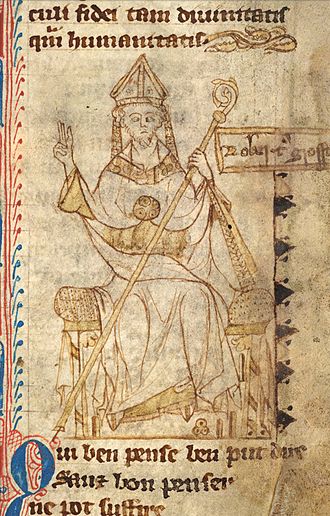
330px-Grosseteste_bishopThe lead story in New Scientist (22 March 2014) explains the physics behind the concept of multiverses and how such an understanding might be enhanced by the discovery that week of a method of peering even closer into the slivers of a second after the big bang . My poor head spun as I tried to get my mind around unfamiliar patterns of seeing, but I gather that observable distortions of wave patterns are now known not to be caused by gravity of other galaxies or telescope errors.

Accordingly, the pattern of these gravitational waves strengthen the idea that the universe is constantly giving birth to smaller “pocket universes”within an ever-expanding multiverse.

So where does one begin to think theologically about this?  I looked no further than the same issue to discover that a 13th Century theologian, Robert Grosseteste, had written a treatise, De Luce, about the properties of light. “The work built on Aristotle’s idea that the motions of the stars can be explained by embedding Earth in a series of nine concentric spheres that make up the universe.” He proposed that the universe began with a flash of light, pushing everything out from a tiny point to a big sphere. He assumed a coupling of matter and light, with the density of the matter affecting waves of “inwardly propagating matter” thus resulting the form of the nine spheres.

Applying modern mathematics, a team from Durham University modeled Grosseteste’s process and found the multi-nested universe he postulated – thus also supporting the possibility of a multiverse.

Science and theology in apparent collusion in ways undreamed of in our post-Enlightenment era. Exciting!

A Million Year Mind

brain1Let’s kick off the Physicists & a Parson Parley series with a look at the lead article in New Scientist (1 March 2014) – “Your Million Year Mind.” (I keep catching myself reading it as “your million dollar mind” – how conditioned am I by the prevailing culture of economic rationalism?)

In summary, the piece explores how the measurable development of stone tools enables us to “look inside the heads” of those who made them. Drawing on research from Bruce Bradley’s Learning to be Human Project, the article tracks the progression of neural pathways that control basic dexterity and motor control through to advanced language, visual imagination, hierarchical thinking and improved memory. In short, it is a fascinating story exploring our cognitive evolution.

As a poetic parson, my mind naturally wanders to other tangents, looking for points of connection (apparently I’ve been able to do this since the days of Homo heidelbergensis or 600,000 years). The emergence of a capacity for visualisation and symbolism must have given rise to the first apprehensions of gods and the forces, visible and invisible, behind the universe. In western traditions, these emerge in a sophisticated form in creation stories like the Mesopotamian Gilgamesh Epic, refined  by the Hebrew post-exilic reflective correction that we know as the first chapter of Genesis. It is the difference between experiencing existence as chaotic and meaningless or ordered and purposeful – an ongoing discussion for our own times.

The documented order of the evolution of the neural pathways of the human brain in this project are not inconsistent with the ordered purpose of the Genesis creation story, which remains open-ended, with humanity, male and female, climaxing the narrative as co-creators and stewards with God.

One wonders what the next 600,000 years will bring.

Physicists and a Parson Parley

New ScientistThere’s a heap of New Scientist magazines on my desk. Scientists of various disciplines, some at the peak of their field, have always been present in the various faith communities I have served. To varying degrees, conversations between faith and science have been mutually rewarding. All have eschewed the alleged dichotomy advanced by fundamentalists of either religious or atheistic persuasion.

Back to those magazines which, I confess, attract and, at the same time, daunt me. As an arty type, I never did well in maths or any of the sciences at school. One of my congregants faithfully passes these magazines on to me, so I feel I should engage them. My intention now is to feature some conversations from topics raised in these magazines. Perhaps, following some decades of dialogue with my physicist parishioners, I can bring some insights that I would not have been capable of earlier.

A neighbouring colleague is a scientist who came to faith and ministry mid-career. She has sometimes mentioned the trepidation of that journey. So here’s me, having reached the notional age of retirement, attempting to do something similar in reverse!

Blogging 101: considering a blog title & tagline

After several years of blogging in fits and starts, I’ve signed up for the basic course at WordPress Blogging 101. Today’s exercise is to consider my blog’s title and tagline and whether its time to change it.

I quite like the current title and find it quite suitable for my purpose. It carries a question within it that reflects my ambiguous nature. Does he really mean “wondering” or perhaps “wandering” – a gift to my critics who have, at times, accused me from wandering off course. What glee!

Of course – it is “wondering.” My contention is that when we arrive at a place in our pilgrimage where we cease to wonder, we cease to live. And if this means “wandering” around before returning to things you are certain of, so be it.

The tagline may need some attention: the ramblings of a perambulent and often distracted sojourner. It’s possibly a bit obscure and loquacious for a casual reader.

It doesn’t point the way to specific content and leaves the field quite open. I am asked about my audience – who am I trying to attract. The answer is anyone who stumbles upon it and cares to linger. I guess I’m the first audience, as this is where I think out loud. Sometimes a reader will open some dialogue, and this is great. The blog is kind of an open journal that I don’t mind people reading, but equally, I don’t mind if they don’t. So I might keep the tagline too, but am open to suggestion.

Possible alternatives?
the mutterings of a curmudgeonly old sociopath
thinking out loud on life’s mysteries
musings of a muddle-headed wombat

None of these really appeal to me! So no change at present.