I resort to pedantry in order to avoid or stall a direct answer to this albeit common question, which I, along with many, must have mulled over many a time. I note the direct USA reference and how I am not sure now which countries use the short scale (10 to the power of 9 ie 1,000,000,000) or the long scale (10 to the power of 12 ie 1,000,000,000,000). It makes quite a big difference, thus discombobulating thoughts on how such a large sum might be distributed.
I would find it such a headache that, whether short or long, I would employ some trusted administrator to set the moolah up as a philanthropic trust for health and education where most needed.
What chore do you find most challenging?

What chore do I find most challenging?
Right now it’s responding to this question!
Each day this month I hang on tight
For when Bloganuary prompts next session.
Eight PM rolls ’round each day
And I hang on tight to my seat
Will the prompt be fair? Will it stretch me tight?
Will I taste sweet victory or smell foul defeat?
Is it possible for chore to be delight?
It depends on what is offering
A call for memory, thought, or voice
Determines what I’ll be proffering!
How do you define success?

Success is the state or condition of meeting a defined range of expectations. It may be viewed as the opposite of failure. The criteria for success depend on context and may be relative to a particular observer or belief system.
Wikipedia
That gets the definition out of the way! Now let’s reflect on it.
“Meeting Expectations” often disappoints. “Cultivating expectancy” on the other hand raises a plethora of possibilities.
“Opposite of Failure” – well, in my humble opinion, failures have led me to experience greater understanding, a more comprehensive capacity for compassion, and a more profound place of contentment.
And it is thus that context and belief system cast their relativity. One person’s success can be another one’s perception of failure – and vice versa.
Has a book changed your life?

I have been known as a bibliophile. As a child “bookworm” might have been my middle name. When I retired I culled my library, disposing of hundreds of books. I also kept hundreds and am culling again – only to make room for more.
Reading has changed my life, but no book in particular – not even the sacred texts that might be expected of me as a pastor! After all, the materials which make books are merely paper and ink.
Behind each book, however, is an author with whom one can enter conversations – agreeing, arguing, wondering, questing conversations. This is what changes – even transforms us.
I am glad for the thousands with whom I have dialogued over the years and who continue to challenge me in transformative ways.
Most Memorable Gift

What memorable gift is a pilgrim’s boon?
From years of sojourning on this planet so small
When one looks over life and discerns its tune
One hears a melody that threads through it all
Of what does life sing and what is its lyric?
Is it symphony, ballad, fairground or rock?
Does it dowse my senses or is it something more pyrrhic?
Perhaps all of these as my memories flock.
Wherever I’ve lived the gift has been there
Where I grew up in Adelaide, then further afield
Melbourne and Perth, then Canberra fair
Then encore in some; the gift always did yield.
The gift is the stories that we can’t help but receive
From fellow pilgrims as life’s wonder we weave.
The Shoulders On Which We Stand
“Don’t brag about your ancestors; give your descendants something to be proud of.”
This was the sage advice on the back of a tram ticket when I began some tentative digging around in our family story. Genealogy was expensive and laborious back then, considered a bit of an oddity, an eccentricity. To build a paper trail that confirmed and authenticated our extended family narrative was beyond the resources of this impoverished theology student of the 1970s. A different cry now following the advent of ancestry.com and the rise of enthusiastic research by other family members who have even submitted DNA for testing to affirm ancient roots.
How far back can we go? Links to a well-known personage in our line take us back to Northumbria and the Domesday Book, which apparently records our earliest-known progenitor, Rodney the Rude (nothing to do with a certain contemporary and bawdy stand-up with a similar monicker!)
So there we have it – a line that includes, bishops, bankers, silk merchants, inventors, lord mayors, politicians and industrialists stands on the shoulders of Rodney the Rude!
When not enough is too much

“Write of Rain!” urges the Bloganuary Muse
It’s not a theme I’d ordinarily choose
‘Tis a tender topic within the land I dwell
‘Cos there’s either too much or it’s parched as hell.
O’Brien’s Hanrahan watched the changing skies
“We’ll all be rooned!” were his constant cries
Whether far too much or not quite enough
That fickle rain had them doin’ it tough.
Right now the floods spread from north to east
Further south and in the west – the sun is a beast!
As El Niño and La Niña perform their dances
Our stewards of the land assess their chances
So to write of rain is a task quite daunting
When such weather seems bent on lots of taunting!
Why do you write? – a Sonnet

Tonight I vowed to pen a sonnet
Regardless of the question asked
I suppose I laid a hope upon it
A writing talent to be unmasked
“Why do you write?” arrives the question
What stirs my need to be verbose?
How am I stirred each scribing session?
Be it rhyme or be it prose?
There is a voice deep within
That clamours to be heard
Screen, pen and paper, to begin,
Offer the first distillery for a word.
So writing provides a platform for my voice
A plethora of words provide plenty of choice!
An Ode to Joy
Bloganuary asks “What Brings You Joy in Life?”
Joy is a habit to be cultivated, in spite of its foreboding nature. I recently explored this phenomenon of reluctance to embrace joy and its fleeting nature due to the defence mechanism we employ to soften disappointment when it passes. It is also an aspect of yesterday’s reflection on “lost treasure” – the capacity to attend fully to the present moment in an awareness of an interconnected and purposeful universe.
So what Ode to Joy might I offer on this hot and sleepy summer’s day (the local indigenous season of Birak) in the outer suburbs of Perth, Western Australia?
Six senses of joy in this moment
The caress of the desk fan cooling my skin
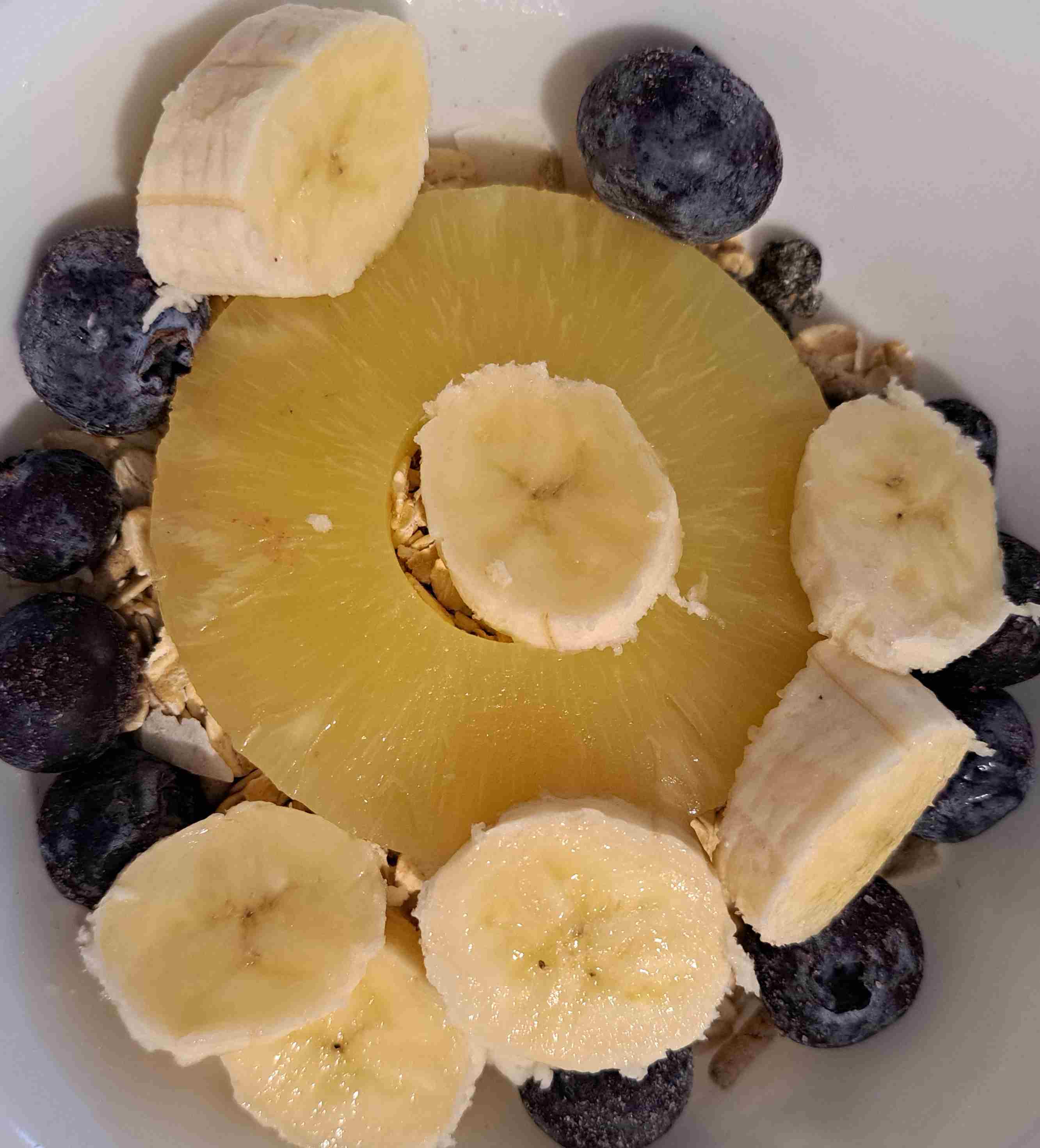
The aftertaste of breakfast blueberries on my cereal
The waft of Vicks clearing my sinuses
The sight of an orderly mess on my desk, promising engagement with today’s projects
The peaceful sound of silence from a nearby highway
The instinct that “All is well, and all shall be well.”
Lost Treasure – closer than you think!
We only need to open our eyes and pay attention. Bloganuary asks “What is a treasure that’s been lost?” Well, it’s all around us. You’ve opened your eyes now, but you still have to go searching.
Some will find clues in quantum physics – that realm of discovery that allows for random, invisible, and transcendent leaps of matter that are beyond the disciplines of empirical knowledge, yet enhance a sense of connection.
Others will find clues in kanyini, the ancient Aboriginal wisdom that describes the caring, supporting, nurturing and responsibility-evoking sense of inter-connectedness of people, land and home.
Perhaps it is in the Hebrew notion of shalom, the harmony of all in balance, embracing God, creation and humanity in all its expressions.
Those in my own faith tradition will find it in the Word that was in the beginning and became flesh and dwelt amongst us, thus awakening the invitation to awareness and participation in an ever-expanding adventure of inner and outer transformation.
The treasure’s not lost – it’s ever within our reach.