I am sitting in the many layered histories of Kings Park – acutely aware of millennia of cyclical indigenous story, colonial appropriation with a desire to preserve a 200 year old outlook, and contemporary efforts to conserve an enormous biodiversity of flora unique to this region. I have just read the opening chapters of Diarmuid O’Murchu’s “In the Beginning was the Spirit: Science, Religion and Indigenous Spirituality.” I have been drawn to O’Murchu’s writings before – perhaps I identify with his self-description as a “non-academic intellectual.” I suspect that for me this week he is my Advent messenger, my “John the son of Zechariah,” a post modern prophet challenging me to see again how the incarnation of Christ is born into a world of crumbling institutions (including formal religion) and lending my years to the vanguard of a renewed form of spiritual engagement. As Advent 3 approaches I look foward to contemplating his input further.
Into Advent 2 – there be Messengers
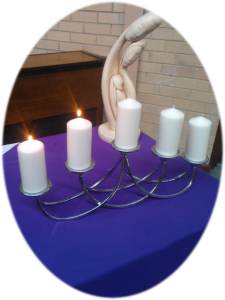
Peace does not come peacefully. Advent is full of heralds who shout loudly to waken us and point us to a cacophony of events that are reshaping the order of human affairs. Fasten your seat-belts and don your crash helmets as we enter the readings for December 9!
Malachi 3:1-4
Today is the day of messengers. We are not sure we want to hear what they have to say – their words confront us where we would rather leave our heads in the sand. Their task is to awaken us and prepare us for cosmic changes. Change is always painful, but, in this season, the result is positive for all.
This Psalm celebrates the anticipated outcome as if it has already occurred. In fact, so certain is the confidence of the worshipper that the promise is already fulfilled even in the waiting!
Philippians 1:3-11
From prison Paul rejoices and gives thanks for the community of Christ that is visible in the reign of love among those to whom he is writing. This is the ultimate outcome of all the utterances of the Advent messengers that have led to communities under Paul’s ministry embracing the Christ who has come into their midst.
John the Baptist is the quintessential Advent messenger – the herald to which all the seers and sages of old pointed. His appearance is sudden, fierce and daunting. We awaken and take notice, however, for he comes preparing the way for momentous change – all for the good! Peace does not come peacefully!
Riding the RCL into Advent
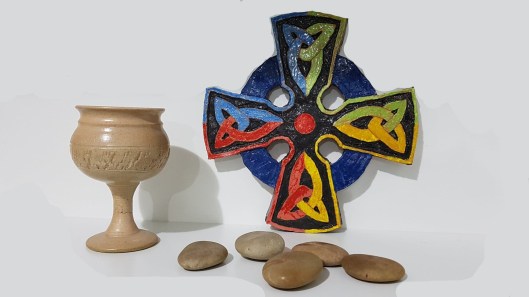
Christmas lights are going up around the street, but it’s not Christmas yet. Our Christmas tree will go up on Christmas Eve and stay for the 12 days of the Nativity commemorations. Next Sunday readings begin the four week season of Advent that precedes Christmas. Like the season of Lent, it is a purple season of preparation that involves fasting! To observe Advent in the way it is intended is therefore quite counter cultural. Following the texts of the four anticipatory Sundays of Advent can therefore help us, even if it is for a brief pause of reflection.
Advent is the season where we meet the prophets pointing forward with hope to the culmination of the big picture. They do so from their own context, but with wider ramifications. They are very much “today.” Jeremiah surveys a bleak political scene and points to the rise of days when the balance of justice and peace will be restored.
And this is the name by which it will be called: “The Lord is our righteousness.”
Psalms are both personal and communal declarations we make towards the Holy One, whose inexpressible name is often rendered through print in uppercase letters as “LORD”, the English translation of the Hebrew Tetragrammaton “YHWH,” the sound of breath, or the action of being. We are always addressing the Mystery, the Ineffable, in Whom we live and move and have our being. To be able to express contrition and hope with such trust and intimacy is a gift that Advent brings us.
1 Thessalonians 3:9-13
Advent preparation involves us as people who are already living the Easter reality. That which we anticipate has already come to pass. This is why Paul exudes such confidence in the joy and love in which the Thessalonian church is called to live. It is possible to simultaneously appropriate and anticipate the realm of Shalom – the Holy One’s perfect reign.
What a scary passage to begin the year of Luke! But we are in Advent, the season of prophets, who tell it like it is. Jesus is speaking to his disciples about the road of service that lies ahead. It’s not going to be an easy stroll – all sorts of obstacles await and events will mount a daunting and discouraging scale. Hope in the vision of what they have witnessed and the reality of the struggle in which they have participated and the union with Christ that is their continuing experience is what will sustain them, even when the world is falling apart.
Beginnings, Endings, Completion

“When did God begin?” was the tongue in cheek question blurted out as a challenge to the RE teacher. The boy wore an analog timepiece. The teacher said, “Show me your watch.” The boy put forth his wrist. “Trace the circumference with your finger. It’s a perfect circle. Show me where the circle begins and where it ends.”
An inspired answer! Someone reminded me this week of a sermon I delivered more than 30 years ago in which chronos time (measured in linear terms like the hands of the watch) is surrounded by kairos time (significant events where awareness of the eternal encompassing the temporal, like a circle without beginning or end, breaks in).
Next Sunday’s readings bring us full circle on the lectionary year, using the language of sovereignty (The Festival of Christ the King) to celebrate this all-encompassing mystery of completion in endings and beginnings.
Hence, the dying words of King David point to confidence in a continuity for his realm that rests in the ways of the Holy.
This same confidence is echoed in the psalm celebrating the sovereignty of YHWH
The vision of the Sovereign Christ, the Alpha and Omega, Beginning and End, begins a dream-like journey of Completion (or Fulfilment) for all things narrated by John on the island of Patmos where he is exiled.
Pilate stands as an agent of temporal empire in all its expressions (even today’s!) non-plussed, incomprehensive, yet strangely drawn to tho the figure that stands before him, speaking the language of kairos of which he alone is Sovereign.
This Sunday also marks the change from a year dominated by the necessary pathway of trial and suffering that is part of the disciple’s journey portrayed in Mark’s Gospel. The cycle now takes us to Luke’s Gospel, which during the coming year, will have us exploring the pathway of mature and committed service for the sake of others – a focus on community building that includes but goes beyond the walls of the church to serve the world. The anticipation of Advent and the joy of Christmas will provide the portal through to that path!
Our anxious times

Next week’s texts are suitably apocalyptic as we approach the climax of the church year. They coincide with a week following the centenary commemorations of the end of the Great War “to end all wars.” Yet there is a global unease as the world retreats into defensive poses in the wake of natural calamity, shifting balances in world power and economic and political angst. An apt metaphor for “Apocalypse” is “drawing back the curtain to see things as they really are.” Our texts hint at this.
We visit the anguish of Hannah, grieving and taunted for her barrenness in a society that measured its wealth and prosperity in creating descendants to ensure tribal viability. It is the soil for the beginning of the story of the birth of Samuel, Israel’s kingmaker and the unfolding narrative of human salvation. Even in the midst of hopeless despair, destiny is awoken.
This could well be Hannah’s prayer. The Psalms provide instances that allow the fullness of expression of human anguish to train through to expressions of trusting hope that speak of guarantee and not merely wishful thinking.
Hebrews 10:11-14 (15-18), 19-25
“And let us consider how to provoke one another to love and good deeds …” This is the “therefore” of the thorough discussion and comparison of Christ’s “once for all” sacrifice with the perpetual sacrificial rites of the old priestly system. There is a particular way to live even in the midst of what some have called the age of spiritual melancholia – the way of agape love spelled out in mutual acts of care and encouragement.
The little apocalypse – Jesus urges the disciples to keep their focus on the reality of the way of the kingdom against the distractions of the times.
Widows’ wisdom
The texts for next Sunday, November 11, feature the wisdom of two wise widows born centuries apart. Both provide touchstones that anchor active and thoughtful engagement with robust faith.
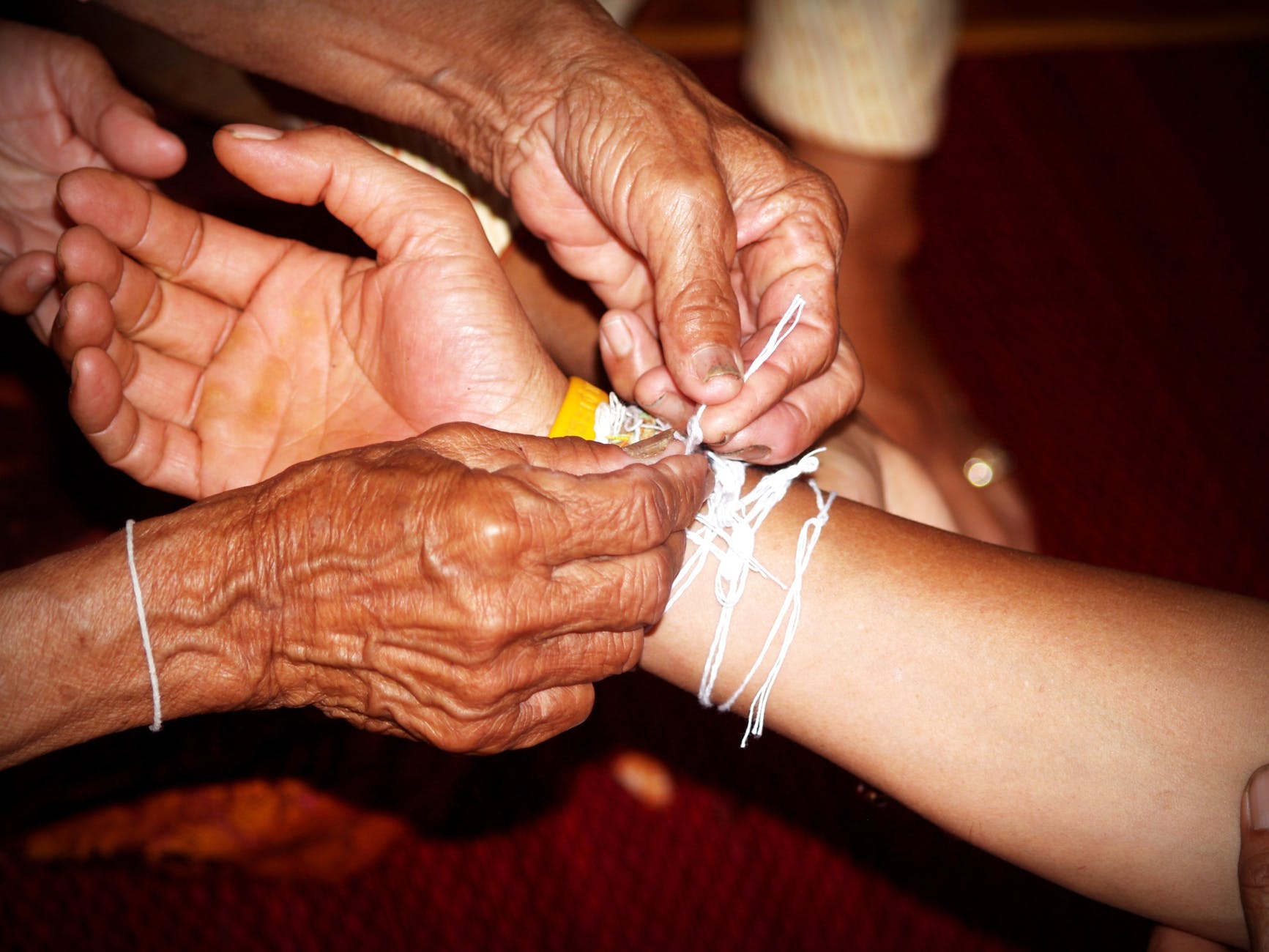
We get a peek into ancient welfare systems and ancient middle eastern tribal succession rites infused with the tenderness of interpersonal relationships involving an outsider, Ruth, who is welcomed into the intimacy of the inner circle. Directly through her came Israel’s eventual monarch of note, David, and then eventually to the one who would be recognised as Messiah, the Christ, Jesus of Nazareth. Hence grass-roots Christianity has always had a bias to recognising the Christ in the alien, the other, the stranger – a pertinent reminder in this age of so-called “border protection.”
Again, the Psalm echoes the acclamation of Ruth’s successful marriage to Boaz, affirming that the striving of the human spirit to overcome complicated, vexing and tragic circumstances falls within the purview of divine destiny, evoking a confidence in a continuous orientation to the ways of God revealed in Israel’s faith.
It is incorrect and disrespectful to think of Jesus’ role as High Priest superceding the sacrificial system of the original Hebrew covenant. Rather, Jesus completes it, bringing it to its zenith, its fulfillment. This is how it should be addressed in interfaith dialogue and understandings.
Echoing the wisdom and trust of Ruth’s Naomi, the widow at the temple treasury provides a non-conscious contrast against the show-off religiosity of those who wear the masks of piety and righteousness. That Jesus would point this out to his disciples after a strong verbal rebuke of the scribes whose talk doesn’t match their walk cements the immanence of his arrest, trial and execution.
Love wins!

Love trumps the vast sweep of the human story. The texts for next Sunday (November 4) celebrate this reality
Here is a micro-story that becomes a lynch-pin in a wide sweeping arc that embraces Jewish and Christian salvation history. Sharing the fate of many who battle for survival in a world that still experience famine, cross-border xenophobia and the tension between security and personal loyalty, Ruth steps out and takes a risk that we see replicated over and over in today’s refugee movements. Sacrificial allegiance to one another shared in extreme duress has been the mark of many coming through resettlement.
Ruth, a widowed Moabite, pledges allegiance to Naomi’s Israelite deity in her determination to remain with her also widowed mother-in-law. Her demeanour through the remainder of her story carries something of the expression of trust celebrated in this psalm.
The comparison and contrast of the once-for-all sacrifice of the living Christ with the old sacrificial system of Israel continues.
Sometimes the boon is to be found in something old and familiar (like a pair of old slippers). The questing scribe who discovers from Jesus that the most precise interpretation of the Law (in which he is an expert) is “Love God. Love your neighbour as yourself” possibly exhibits an “Aha!” moment of fresh insight. Jesus declares he is not far from the kingdom of God.
Reorientation of trust

Again, a common theme runs through the selected texts for next Sunday, October 28th.
Job 42:1-6, 10-17
- Sad and sorry Job, accommodating God’s ineffability, reorients his trust in God.
- God rebukes Job’s “oh so right” would-be comforters and feeds them humble pie.
- The closing elysian scene sees Job’s good fortunes and family richly restored.
So what’s the point of the Job saga? What role did it play in the faith community from which it arose? How does it play out today?
Now as then, with prosperity doctrine married to the politics of economic rationalism, we are offered a counterpoint that upholds the dignity of the individual and a warning against confusing God with mammon.
Psalm 34
This prayer of praise echoes the stance of one who, like Job, is reoriented to trust in God in spite of a rough time. Against the zeitgeist of a retributive religious system, the psalmist concludes: “The Lord redeems the life of his servants; none of those who take refuge in him will be condemned.”
Hebrews 7:23-28
Contrasting the work of Jesus as eternal High Priest against the appointed high priests of the old sacrificial system, we come to the crux of the Letter to the Hebrews. Christ has ushered in a new age, a new way of being before God. The old system repetitively cycled God’s people through the need to have their short-fallings made good through the ministrations of equally fallible high priests. The non-fallible Christ, taking on the role of High Priest, breaks the cycle, presenting God’s people as perpetually right with God. Does this mean we no longer sin? No, discerning, confessing and repenting is still part of our inner spiritual cycle, but with an infinitely more confident trust in our calling to Christ-likeness and the fulfillment of Christ-like vocation.
Mark 10:46-52
The healing of blind Bartimaeus is pregnant with meaning in Mark’s telling. An intriguing place to begin is by noting that from all gospel incidents of Jesus healing the blind, it is only here that one is named. Our attention is drawn immediately to the interplay between the identity of the blind man (“Son of Timaeus”) and his raspy calling out to Jesus as “Son of David.” One commentator delves into the Aramaic roots of the name Timaeus postulating its ambiguity of meaning. Does Bartimeaus present as the “son of fame” or the “son of shame?” Either needs rescue from metaphorical blindness if they are to see with the vision of the way of Christ! Bartimaeus trust is uninhibited as he abandons his cloak and, seeing, falls in behind Jesus as he enters his final days.
Who’s running this show?

Next Sunday’s texts seem to focus on answering this question that often arises when we are frustrated. Things are out of control – who’s running this show? I’m in charge here and am being ignored and need to assert my authority – who’s running this show? We are confused, depleted, burned out, and have nowhere to go – so who’s running this show. We turn to the texts.
Job 38:1-7, 34-41
Job the good has relentlessly clung to a trust in God who has seemingly allowed Job’s terrible suffering without any hint of intervention. Even so, Job has deigned to question God’s wisdom in a form of the “Who’s running this show?” accusation. The response comes from the midst of a whirlwind – an appropriate metaphor for the ambiguity of the Divine under such circumstances. Martin Buber writes,
“But how about Job himself? He not only laments, but he charges that the ‘cruel’ God had ‘removed his right’ from him and thus that the judge of all the earth acts against justice. And he receives an answer from God. But what God says to him does not answer the charge; it does not even touch upon it. The true answer that Job receives is God’s appearance only, only this, that distance turns into nearness, that ‘his eye sees him,’ that he knows Him again. Nothing is explained, nothing adjusted; wrong has not become right, nor cruelty kindness. Nothing has happened but that man again hears God’s address.”
Psalm 104:1-9, 24, 35c
This Psalm is the natural response of the person who has arrived at Job’s experience of reconciliation with the notion that God’s sovereignty is not dependent upon or even related to our goodness or otherwise. The Holy has its own agency and acts accordingly. We are to attend to our own responsibilities without thought of divine reward or retribution and adopt an orientation to simple trust in what God has deigned to reveal of God’s creative purpose. After all, it is God who is running the show!
Hebrews 5:1-10
The unfamiliar terminology of this text further explains the link between human suffering and ultimate order. The “order of Melchizedek” under which Christ endured a high priestly suffering delves into an ancient pre-Israel notion of the link between striving and destiny. Human striving and divine grace are linked. To ask the question “Who is running the show?” is to place oneself in a place of the possibility of transition to an even deeper query: “How does human suffering find meaning in the light of Christ’s redemptive action?”
Mark 10:35-45
James and John want to run the show but they are not yet wedded to the way of Christ. Perhaps they need to enter more deeply into the experience of Job’s awareness and realise that they are walking with a whirlwind. Jesus puts it to them in the form of his own question – can they drink from his cup and enter the same experience of redemptive suffering that he must enter? He ultimately simplifies things for them. If they want to be in charge they must paradoxically adopt a servant’s heart.
Not for Sissies!
I well remember a man, somewhat advanced in years, telling me that “growing old is not for sissies!”
Next Sunday’s texts remind us that living the life of faith can be much the same.
Job 23:1-9, 16-17
Is there room in contemporary experience for the twin terror of God’s absence and God’s presence? Can we know both at the same time? Job maintains a God-focus even from the bottom of the pit of his despair – he would contend with God if at all possible but at the same time shrinks from God’s total “otherness.” Both absence and the presence are impossibly felt at the same time. No easy answer – simply a call to attend to the paradox of God in the midst of life’s toughest struggles.
Psalm 22:1-15
Jesus poignantly recited the opening phrase of this psalm while hanging on the cross. “My God, my God, why have you forsaken me?” For the devout Jew, to recite the first line of a psalm is to hold the hymn in its fullness. It is evident that the lived experience of God in simultaneous presence and absence is strongly expressed through the faith of Israel and there are no qualms or reticence in giving this feeling strong expression.
Hebrews 4:12-16
The burden of the writer of this work is to lead Jewish Christians to a sound understanding of the work of Jesus as Messiah in reconciling humanity to the Creator. He does not mince words in relaying how God’s word is like a two-edged sword, inflicting painful cuts that divide “soul from spirit, joints from marrow.” Jesus’ work as “High Priest” however, introduces a fresh element to the equation, enabling confidence and trust in knowledge of God’s favourable stance towards humanity.
Mark 10:17-31
A would be follower of Jesus retreats when he learns what would be required of him. Peter voices the protests of his peers about all they have given up to follow Jesus’ way. It is apparent that following Jesus is not for sissies! All over the world are multitudes who pay the cost to follow this way – in recent days I have heard of persecution in India, suppression in China and, last night, a young Palestinian speak of living the non-violent life of Christ’s way under the severe duress of occupation. Mark’s Gospel was penned by a community experiencing extreme duress as the result of becoming Christian. It is an expected part of the Way.
 Wondering Pilgrim