October 7th is also World Communion Sunday. How do these texts relate?
 Here is the counterpoint to any popular “prosperity” gospel. Bad things do happen to good people. Here we see the beginning of a morality tale. Let’s not get side-tracked in the detail of ancient storytelling devices (did God really allow himself to be manipulated by Satan into using Job in some sort of cosmic gladiatorial contest?) Here the stage is set for the real contests that life sends our way. There are no slick answers but something precious emerges from the struggle. That’s the message these opening scenes are meant to convey.
Indeed, this might well be Job’s psalm. The poet holds fast to belief in the hold of his integrity against adversity and trusts the Holy One to be faithful even when all evidence of such faithfulness is hidden.
The anonymous letter to the Hebrews begins with a majestic announcement of the fulfilling role of Christ as the climax of the series of seers and prophets anointed to speak God’s Word to Creation. The later Hebrew cosmology of angels is used as a comparison to the glory to which humanity is called through the sacrifice of the Christ. Voices from early times onwards have called for the separation of Old and New Testaments and Hebrew imagery from Christian teaching, but this would amount to historical revisionism. We need to know and embrace our full story, especially those episodes that are beyond our cultural understanding. The New Testament is replete with imagery from the crucible of Judaism and is instructive in how its expression reached beyond the faith of Israel to embrace the whole cosmos.
This passage has recently been used as a bludgeon in the same-sex marriage debates. The context reveals that Jesus was opposing the patriarchal concept of women and children as chattels, easily disposed of with a ticket of divorce. Marriage bonds are sacred in their mutual accountability. In the same breath, you must become like a child to enter the Kingdom of God. With these utterances, Jesus crossed significant cultural boundaries and exposed himself and his followers to increasing risk and danger.


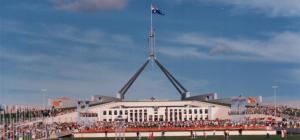 Here is an expression of confidence that the good and righteous will prevail. It has been an interesting week of debate over the role of the new Prime Minister’s personal faith in his public life and particularly as a head of state. As his position came about through a very non-edifying “ides of March” display that is still playing out and critics analyse previous cabinet minister policy formation in the light his faith stance, it is clear that this Psalm comes under the category of Walter Brueggemann’s “Psalms of Orientation” – not quite addressing the period of disorientation we are experiencing right now. It’s a psalm that tells us where we ought to be. We look to the psalms of “disorientation” and “reorientation” that will hopefully put us back on track. My wistful hope is that the church in this country will not delegate its responsibilities to elected public officials but instead adopt its correct prophetic stance as salt and light as participants in a robust democracy.




 And here is the shadow of all the life, love, goodness and light in the preceding texts. Jesus, in whom all this is embodied, is opposed by the very guardians of this tradition. The problem is they have built so many walls around these precepts that they are no longer recognisable. The harshest words of Jesus are reserved for those who are so dedicated to enforcing the keeping of invented rules and regulations that the essence of receiving the gracious invitation to the fullness of life has become inaccessible.
 What has been is what will be,
 Yesterday I listened to a Roman Catholic priest address an ecumenical but predominantly Roman Catholic gathering on Baptism and Meditation. In illustrating the practice of meditation (properly “contemplation”) as an act of creating hospitable space for us to become aware of God’s constant hospitality towards us, he described how, following his full observance of the exhausting yet rich rites of Holy Week, including Passion Friday and the Easter Vigil, he sought refuge from liturgy and theology by attending his local Church of Christ, where he could simply “be.” He knew the minister, yet the church was large enough for him to be lost anonymously in the Easter Sunday crowd (or so he believed). Nevertheless, he was overwhelmed by the hospitality offered him as an anonymous visitor. He said this is what it is like to live out of our baptism which has more to do with relationship than correct liturgy and theology!
 Wondering Pilgrim